
Mar Adentro
Hotel
San José del Cabo, México
2012-2015
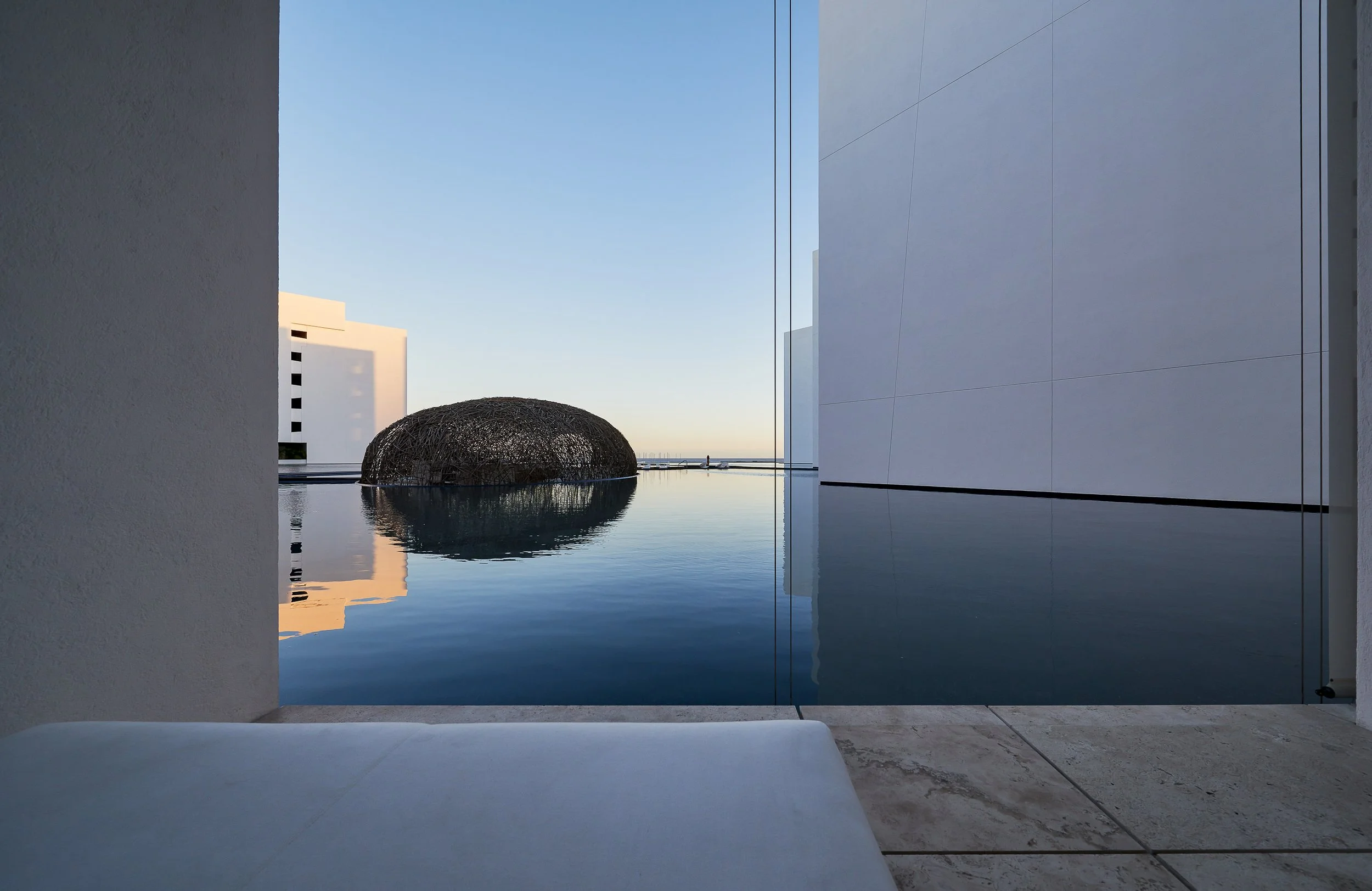
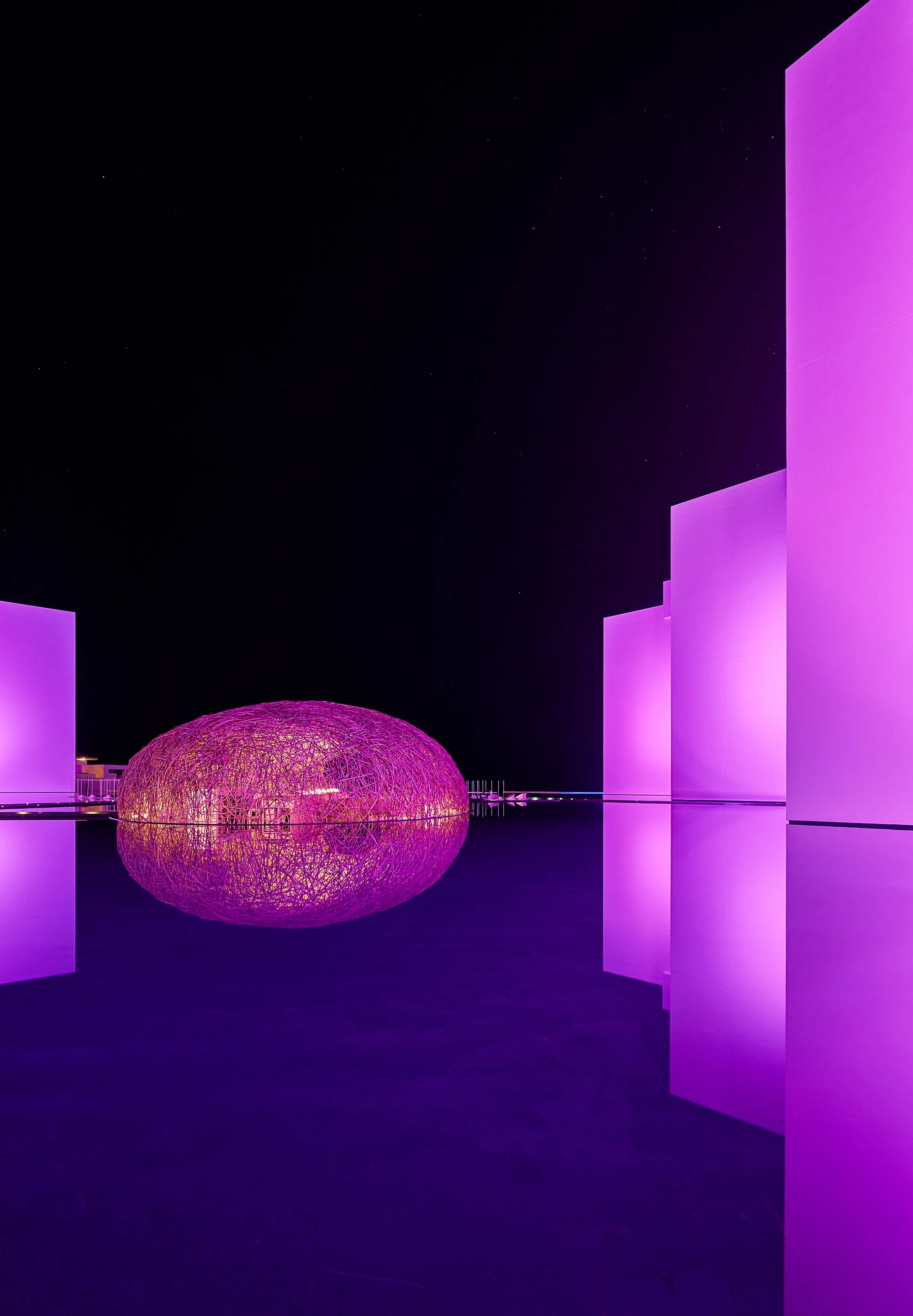
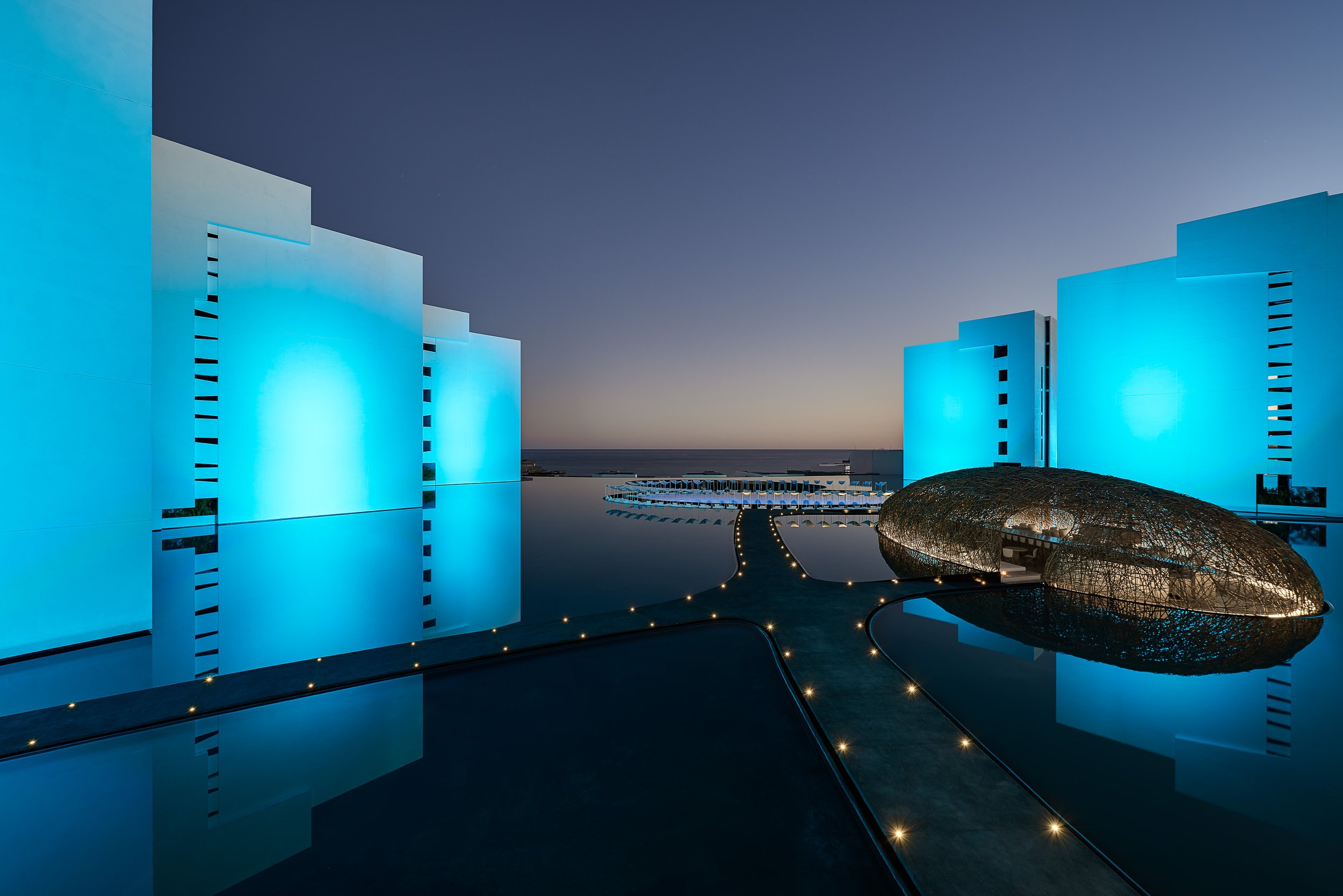
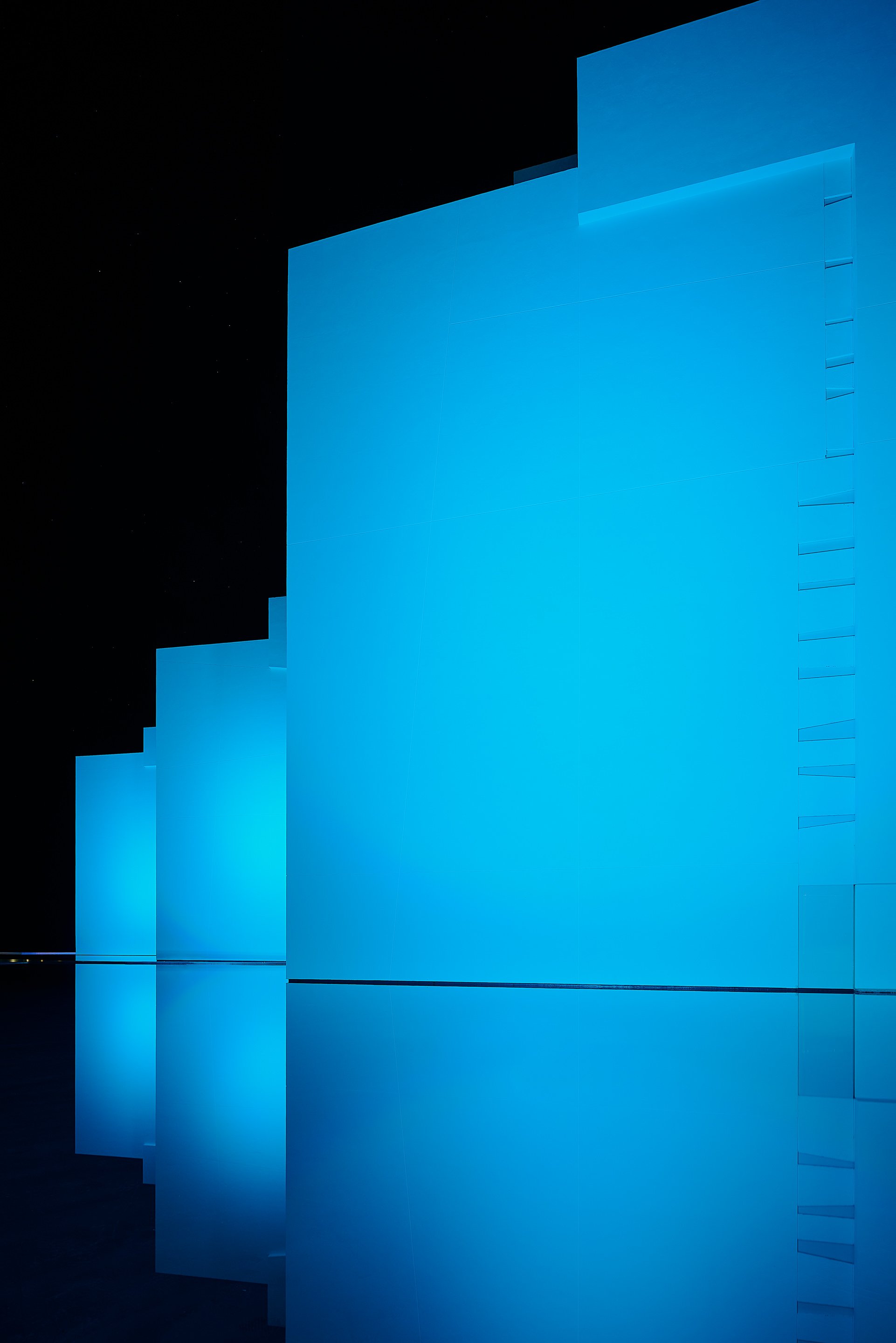
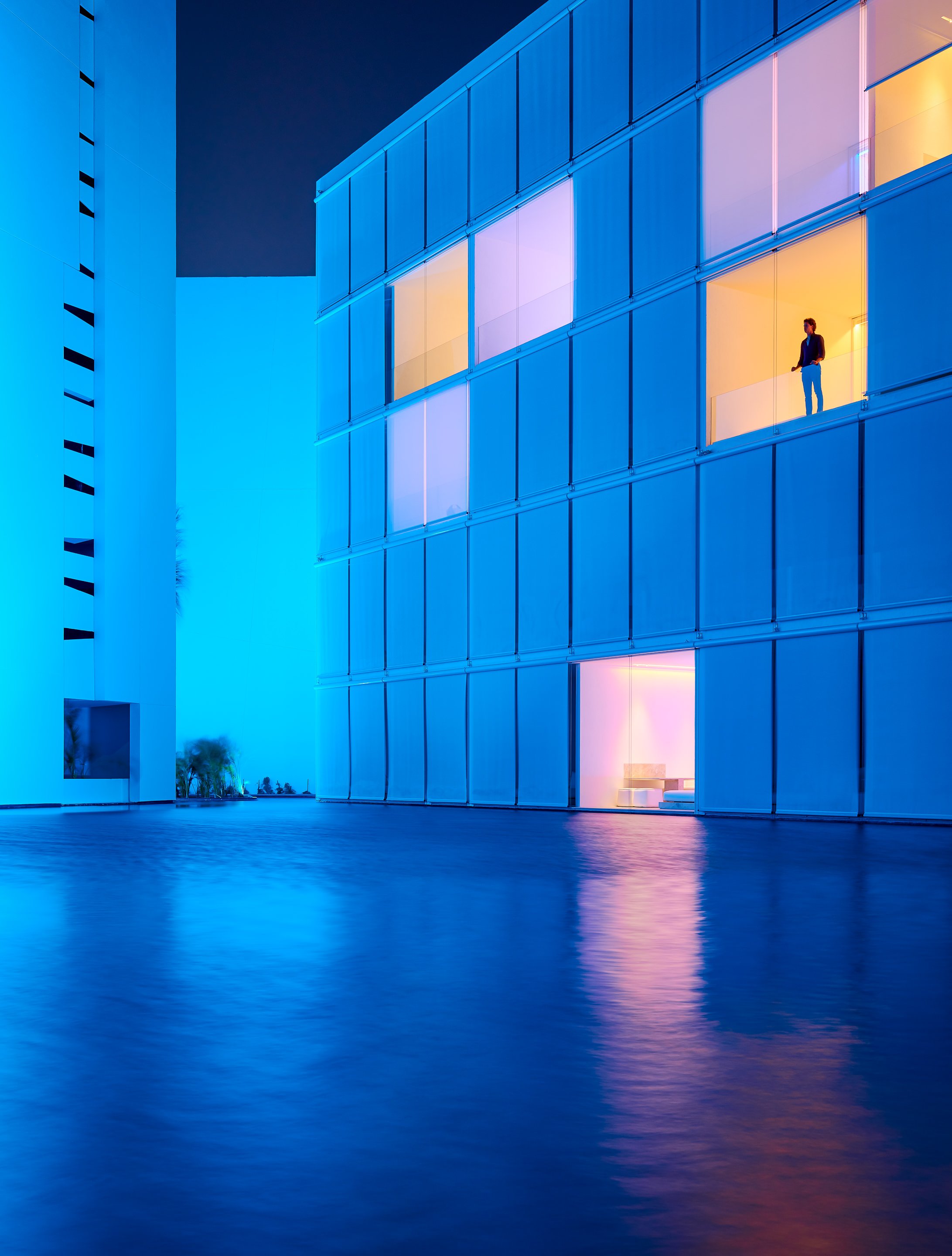
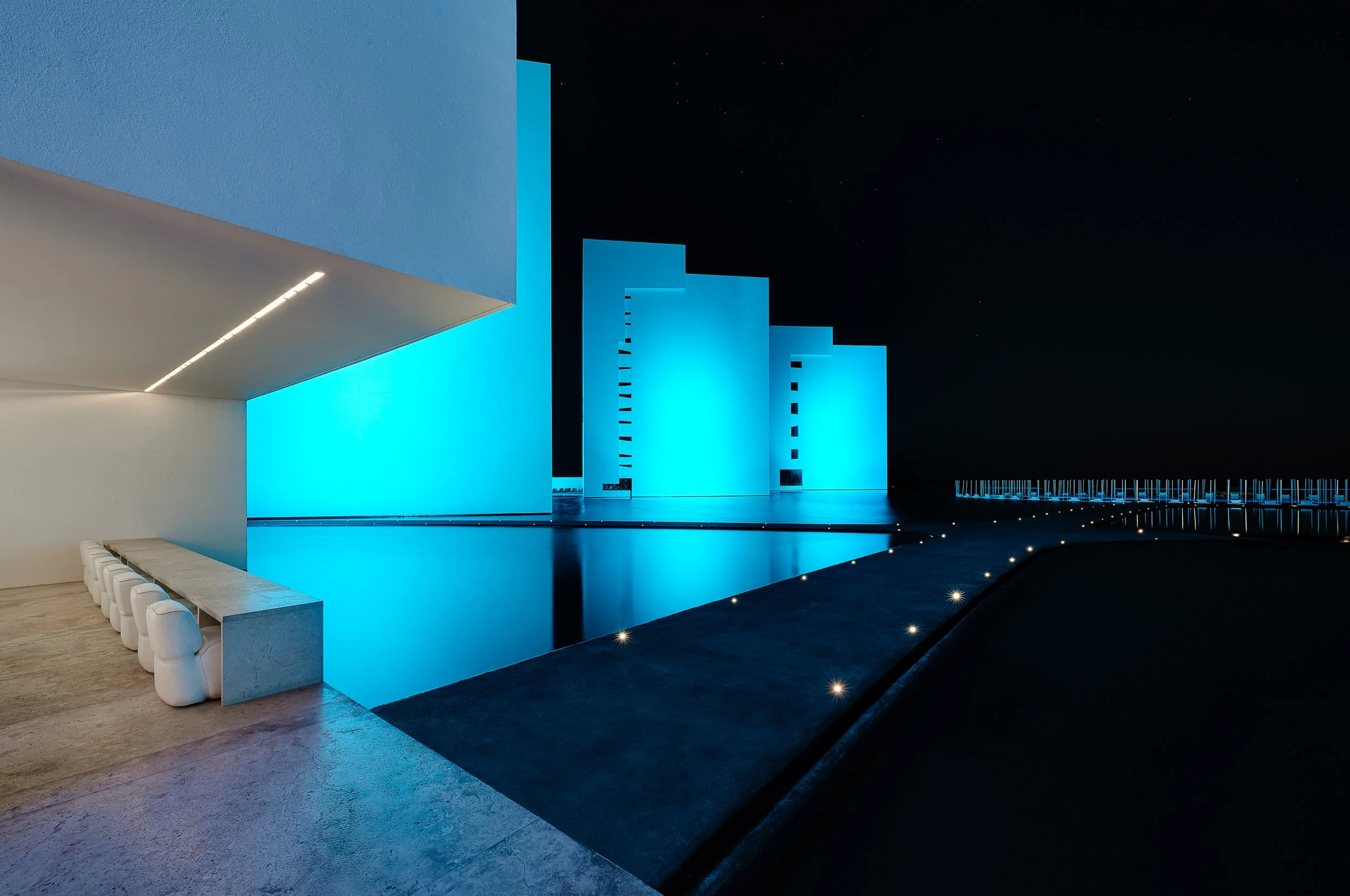
As is usually the case for Aragonés works, the construction for this project was handled by Taller Aragonés, as was the lighting. The preliminary project was designed in January 2012 and the hotel was inaugurated in December 2015. The Mar Abierto ("open sea") Spa was completed two months later, in February 2016. Miguel Ángel Aragonés refers in poetic terms to his first visit to the site, where the desert meets the sea. "It was the purest, most minimalist landscape a horizon could have drawn," he says. As if to further emphasize the intimate connection between the buildings and the sea, the design includes shallow pools of water that bring the essentially angled rectangular volumes of the hotel together. In Spanish, the term mar adentro means "the sea inside."
Philip Jodidio Text
Joe Fletcher Photography
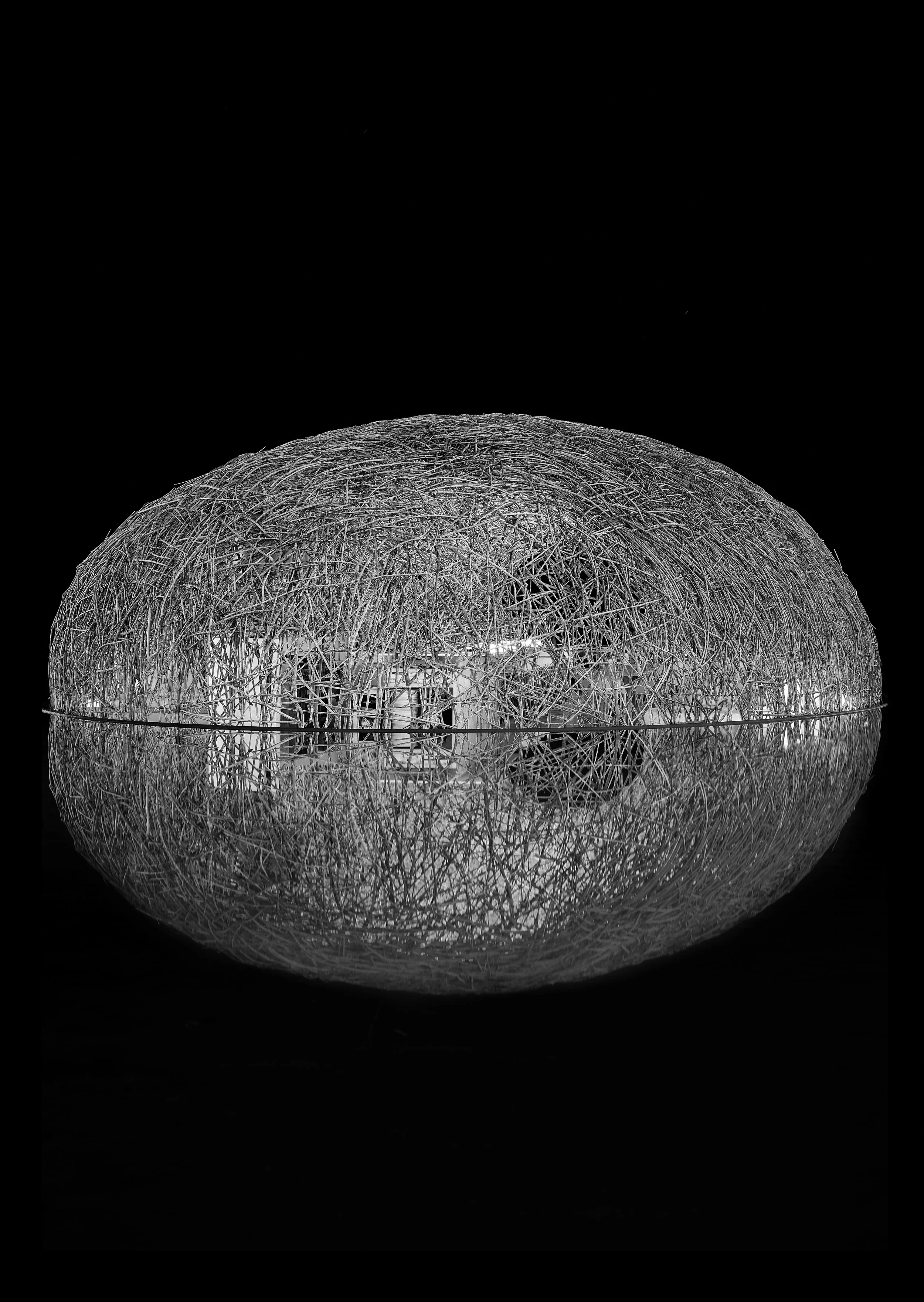
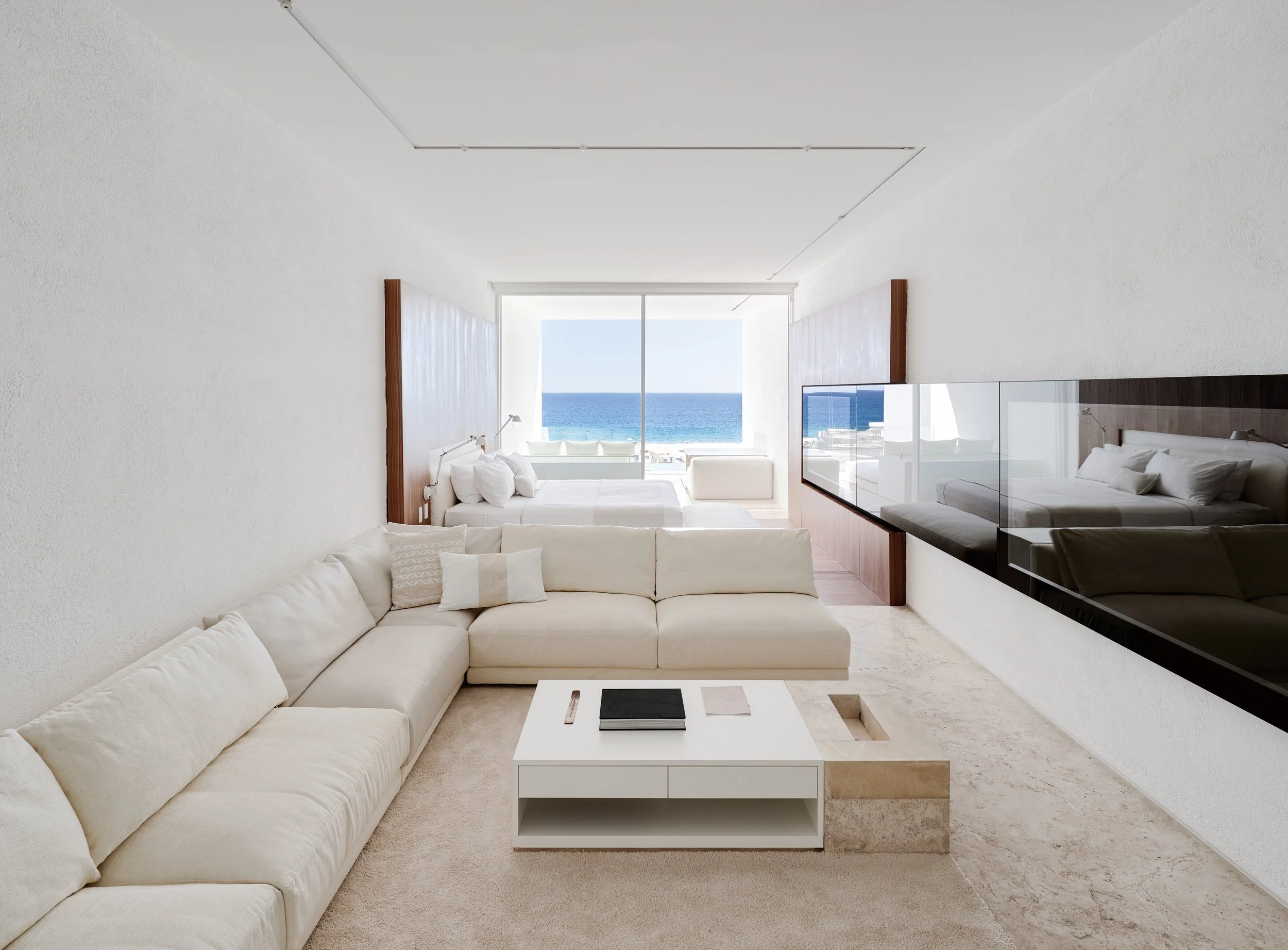
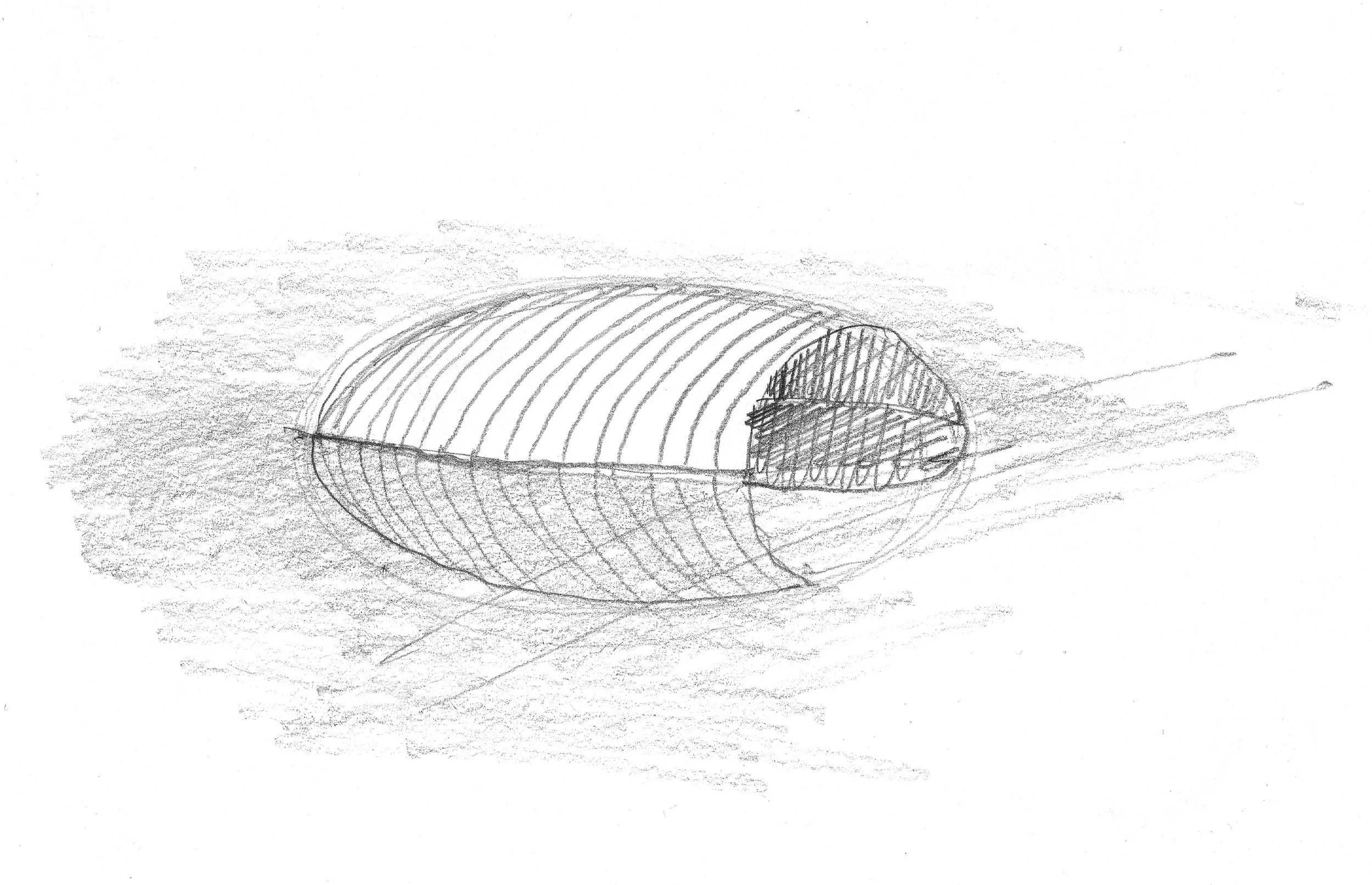

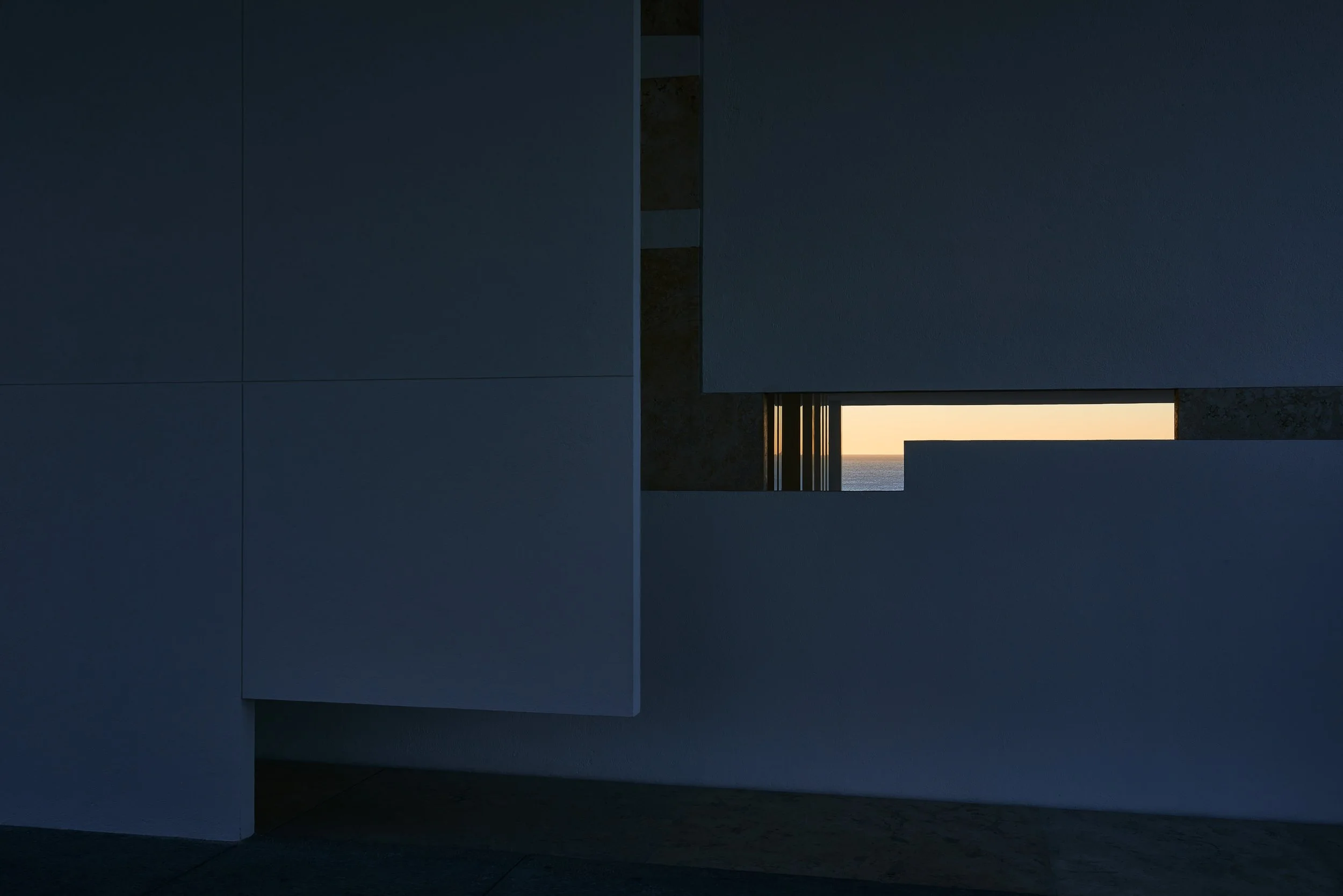
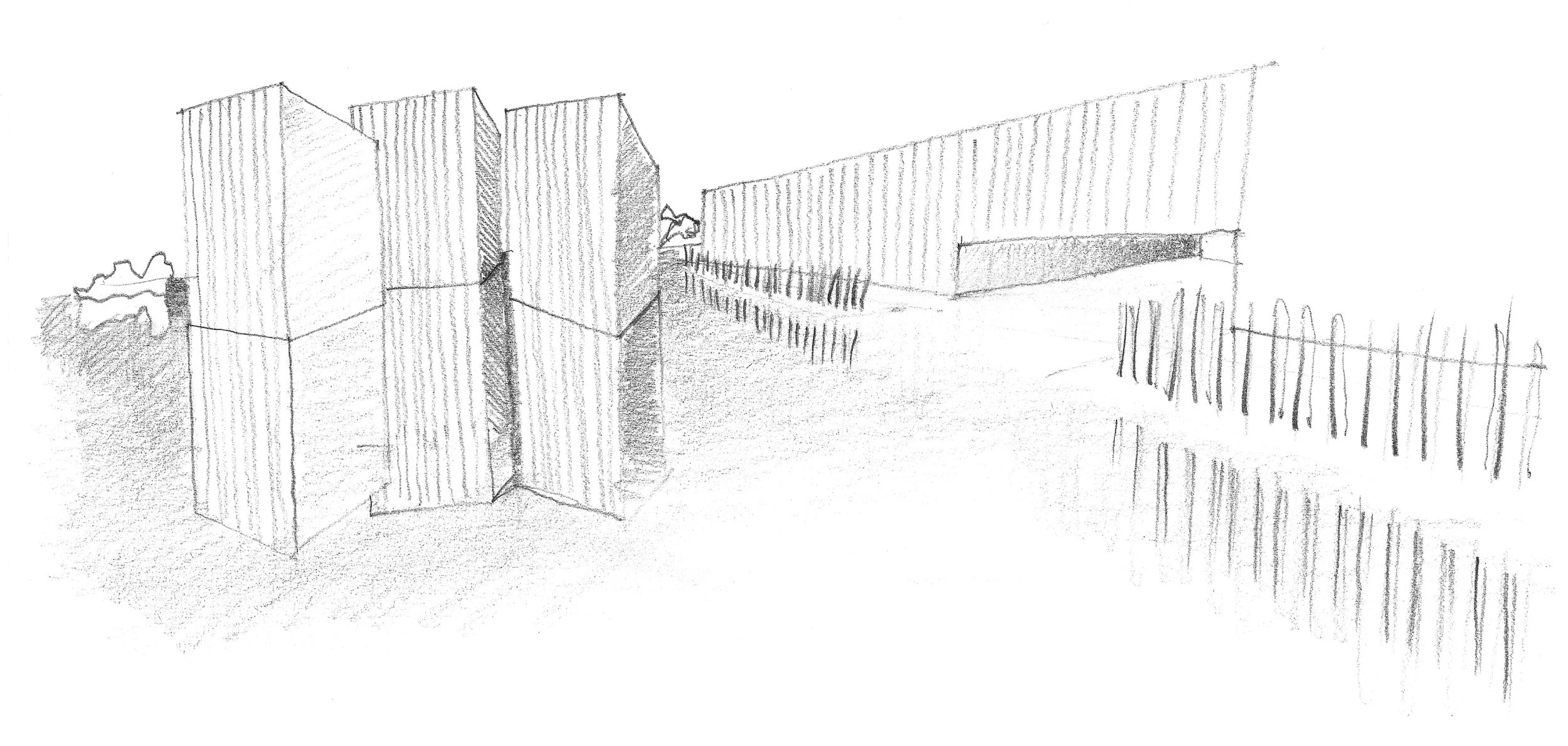
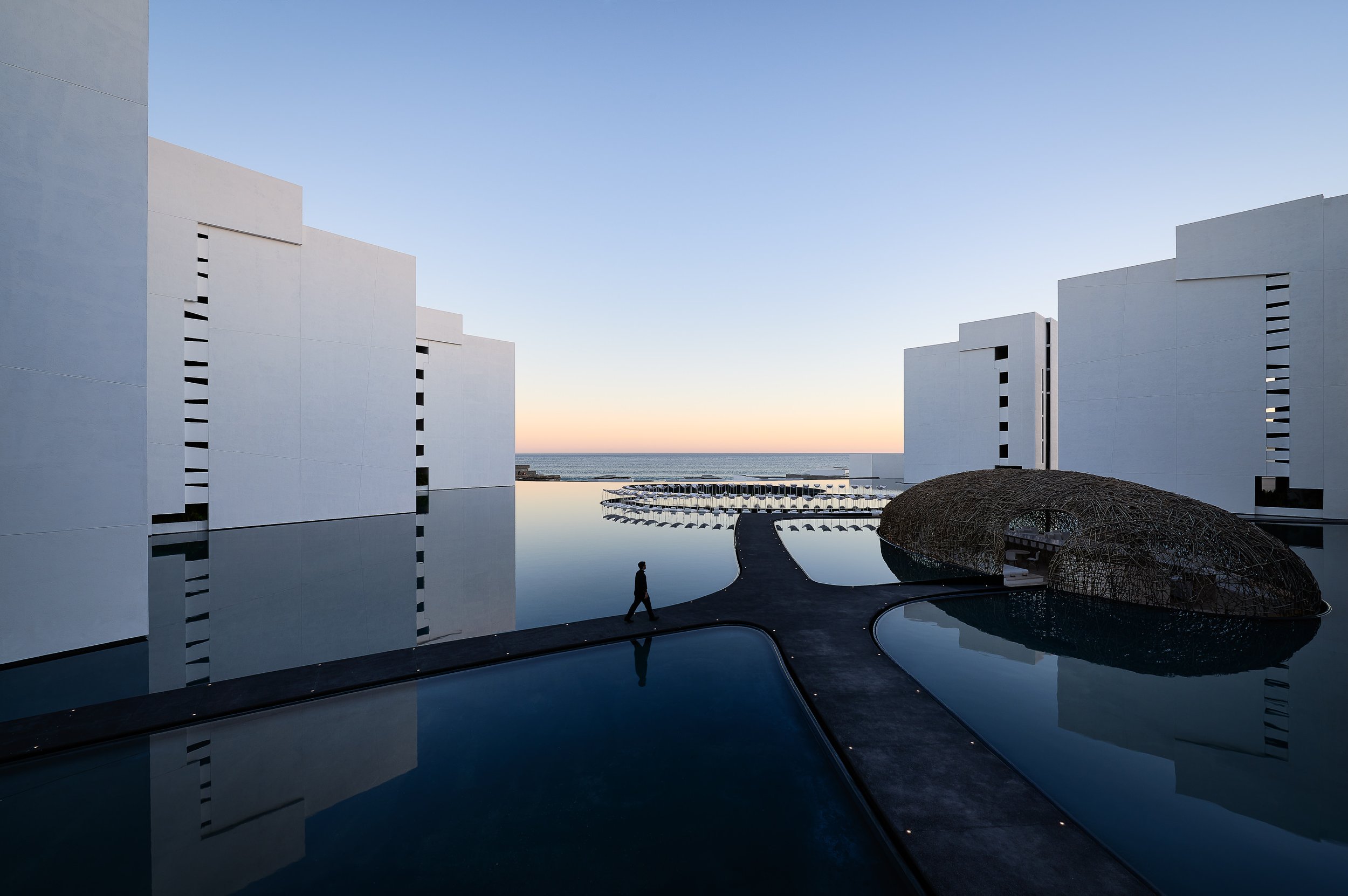


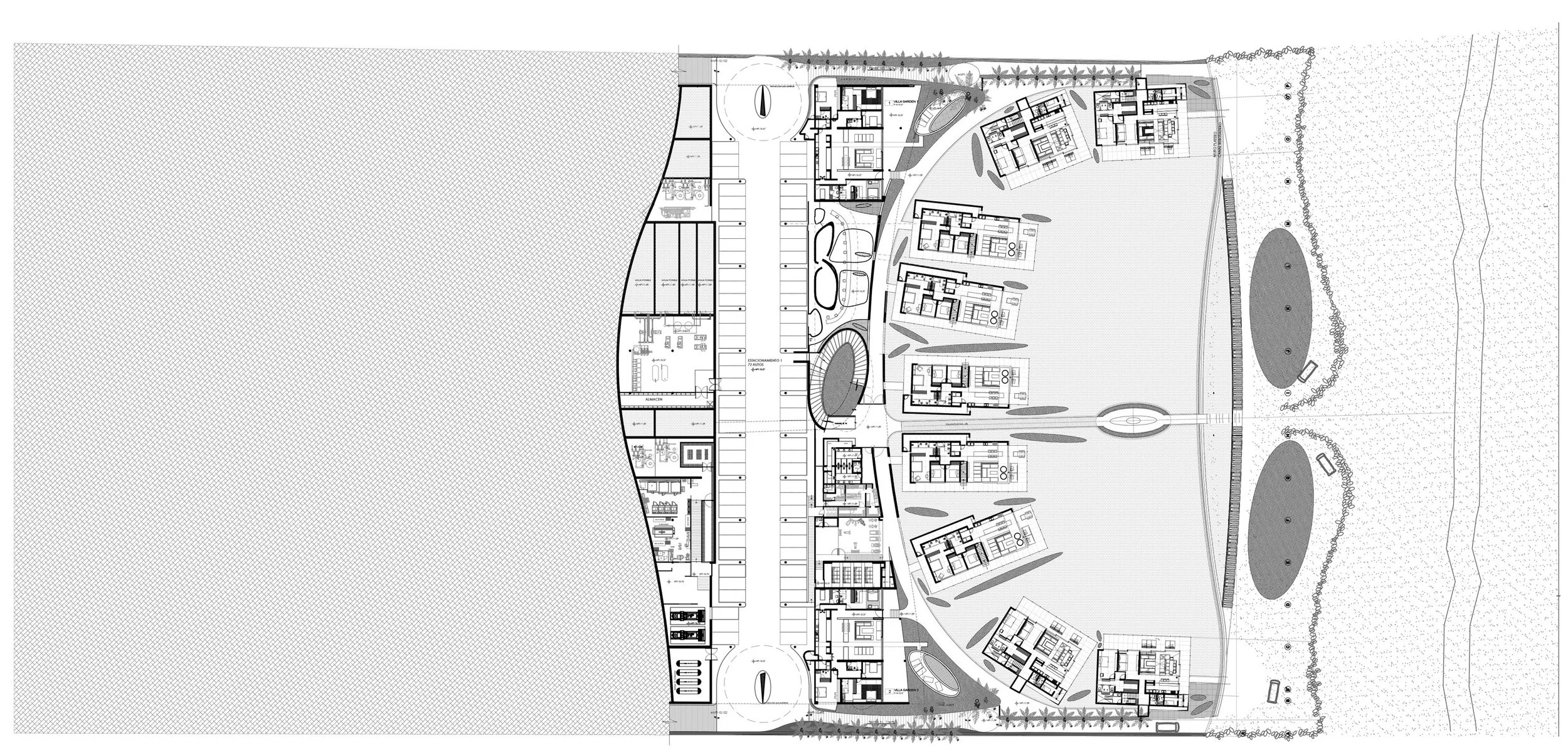
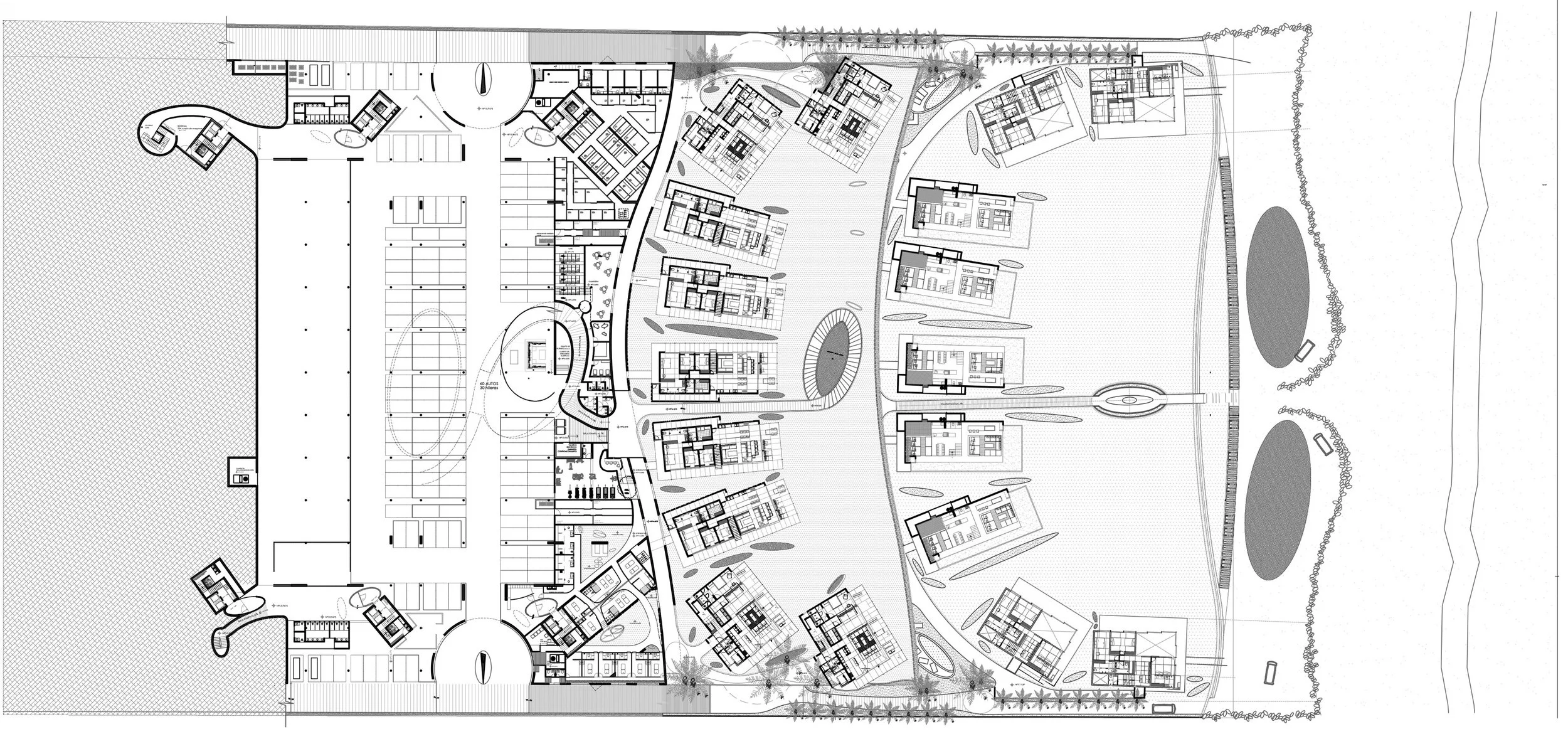
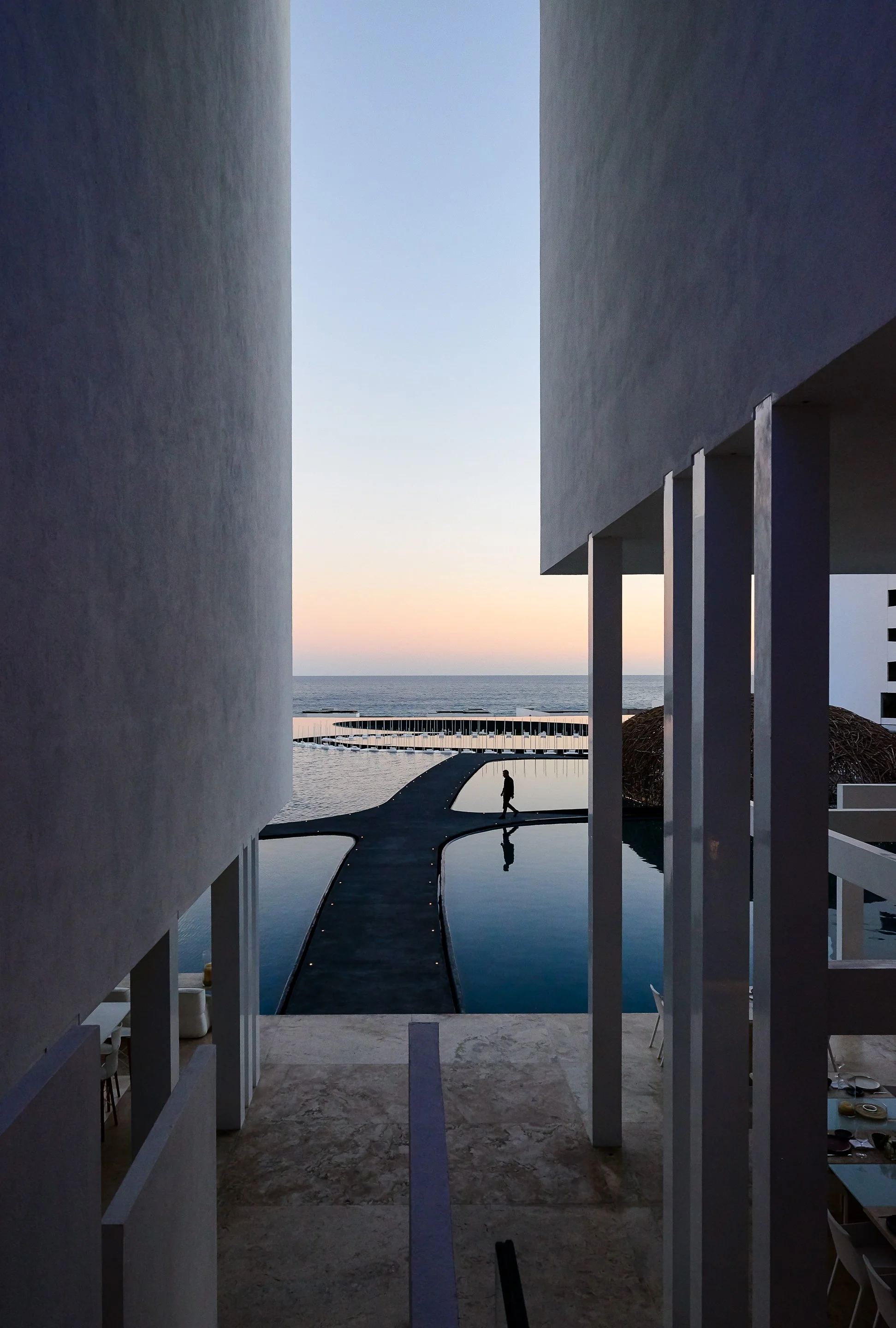
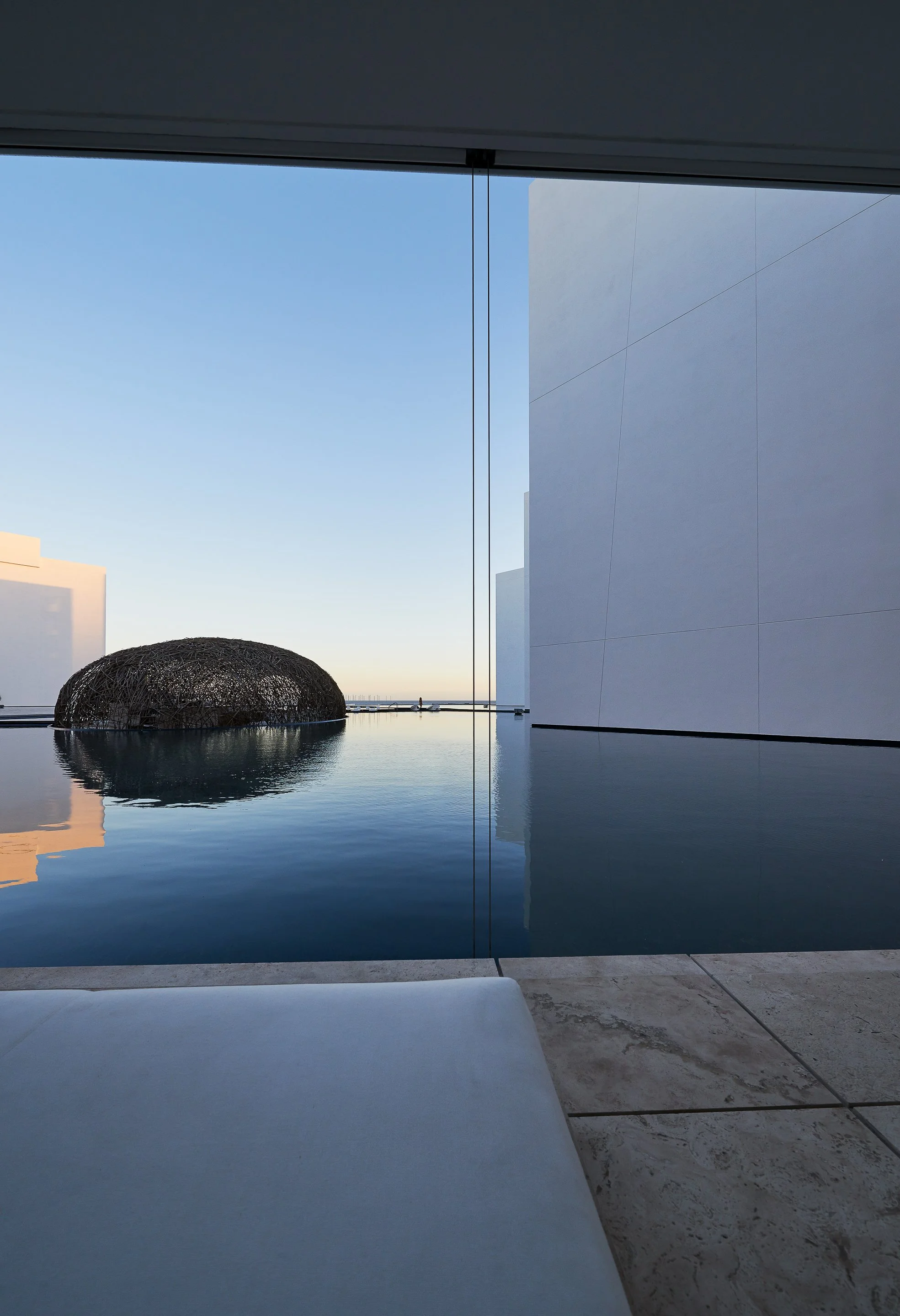
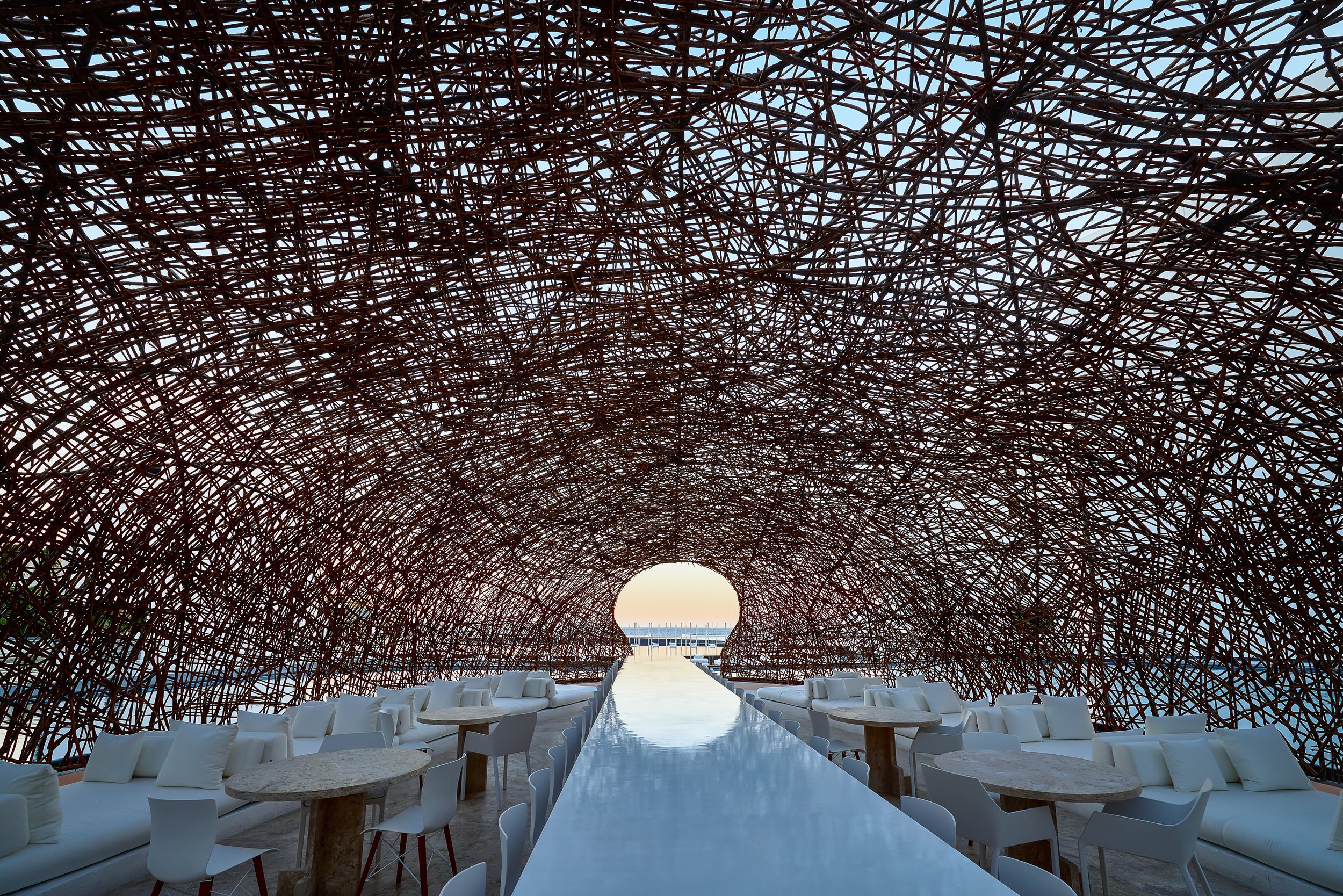
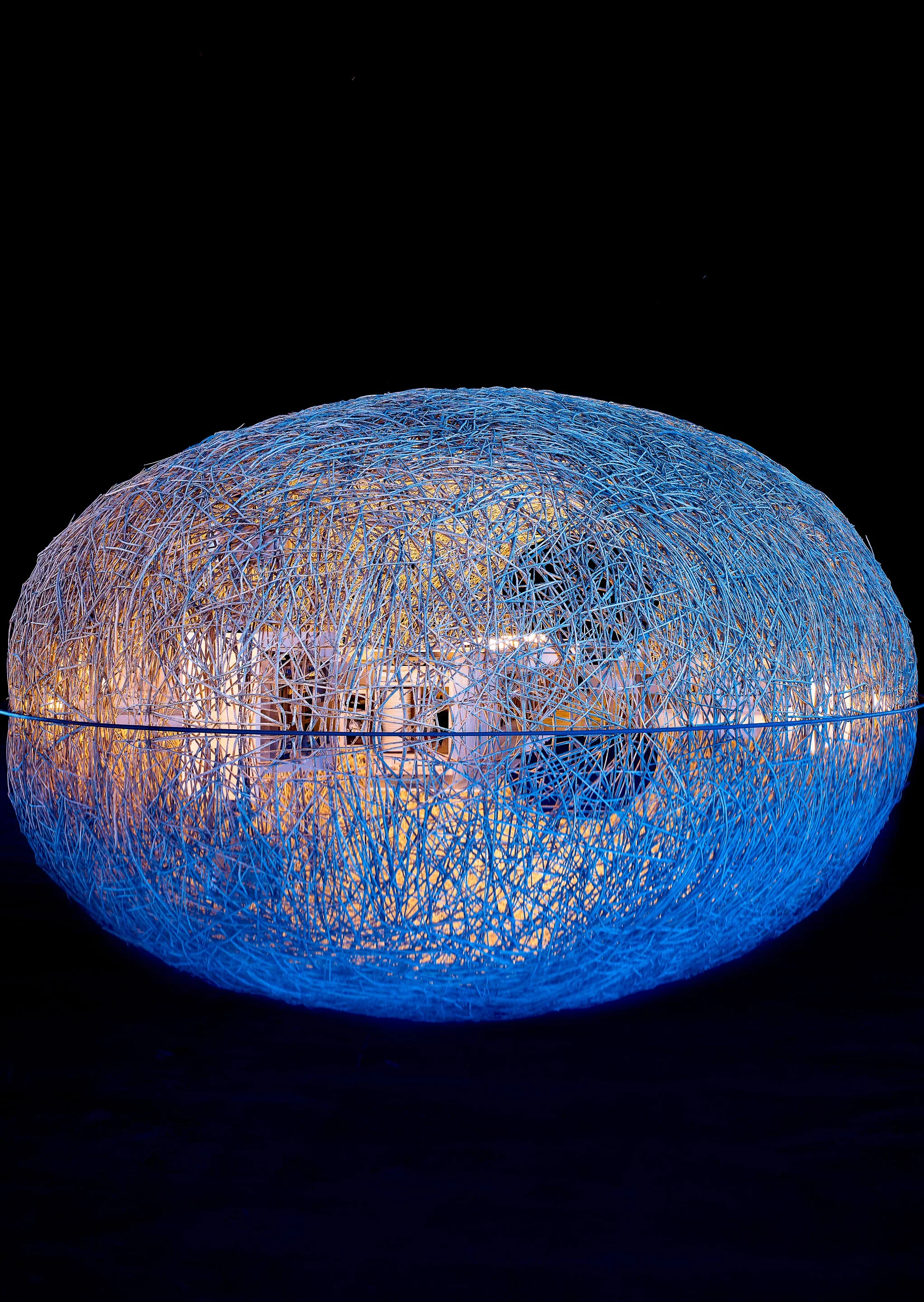
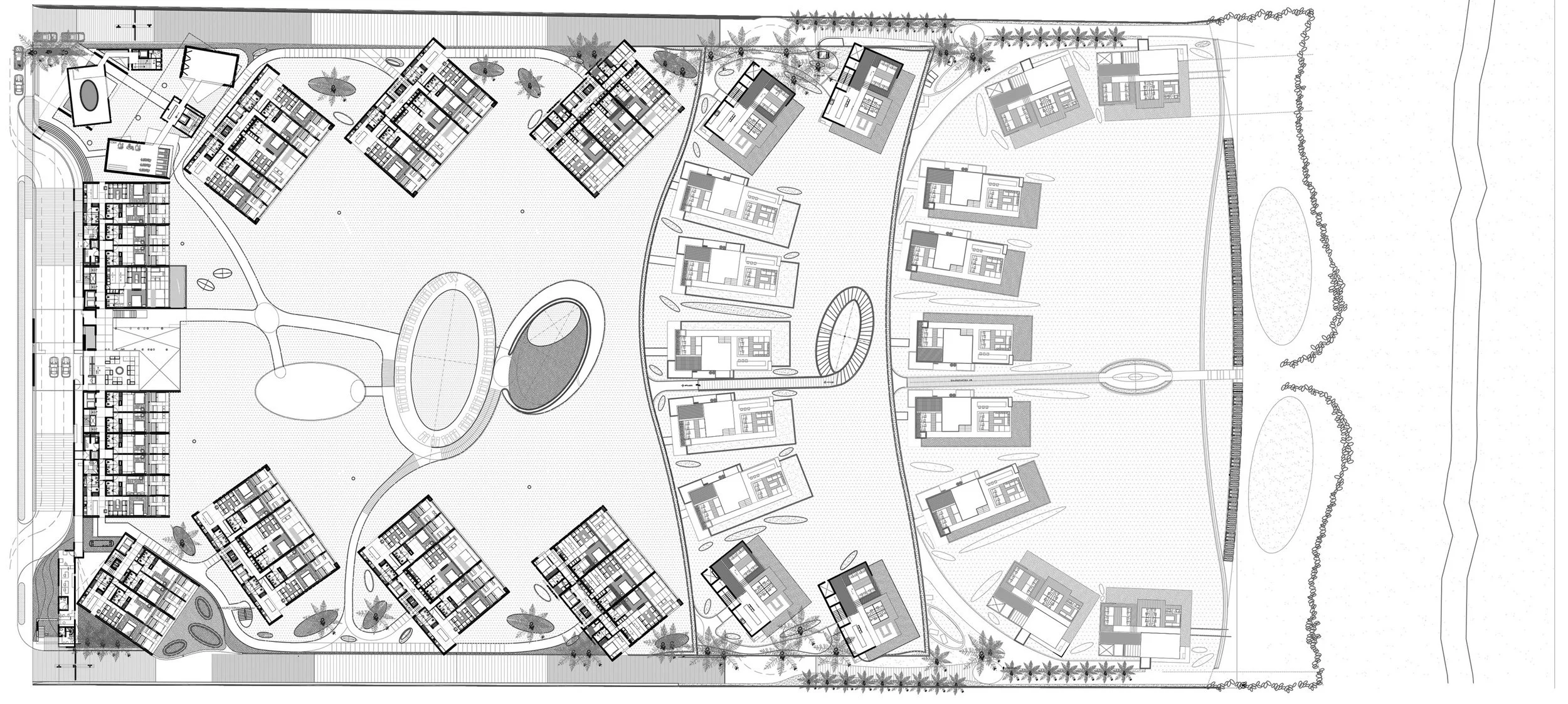
The white surfaces of the building also tie the complex into an unexpected and rather monumental whole — monumental not so much in the sense of size, but rather in the sense of serene inevitability. Only the woven ovoid shape of the central restaurant, which appears to float in the water basin, differs in density and aspect from the actual hotel buildings. The 2,000-square-foot (186-square-meter) enclosure is made of bent steel rods and local mangrove branches and has tan marble floors. "I needed to create something opposite of the rigid, concrete buildings — something circular and soft," says Aragonés, "so I thought about the form of a cocoon." The complex includes an art gallery, several restaurants, a shopping center, and 198 guest rooms for a total floor area of over 325,188 square feet (30,211 square meters), and 651,636 square feet (60,539 square meters) including the pool and terraces.
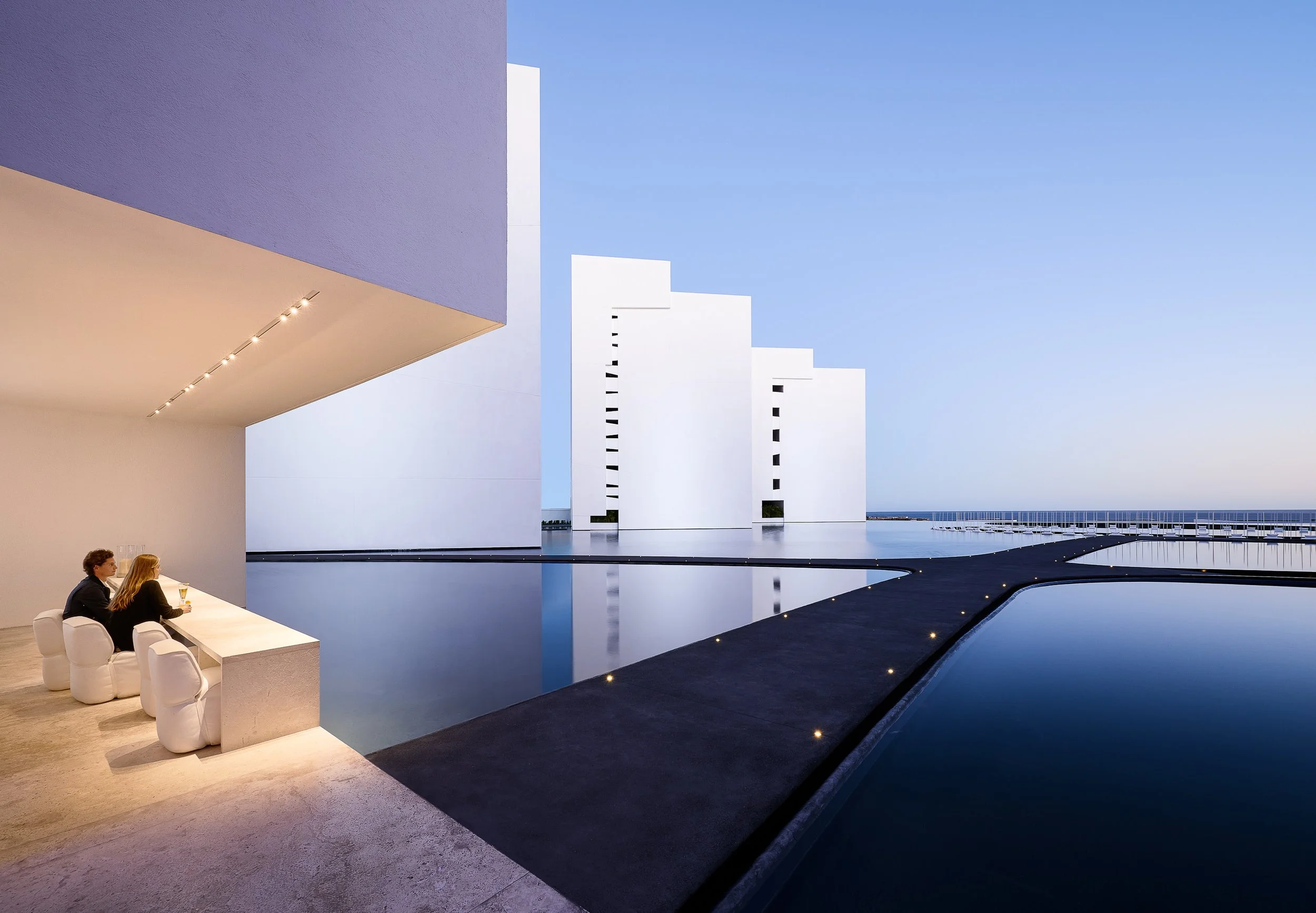
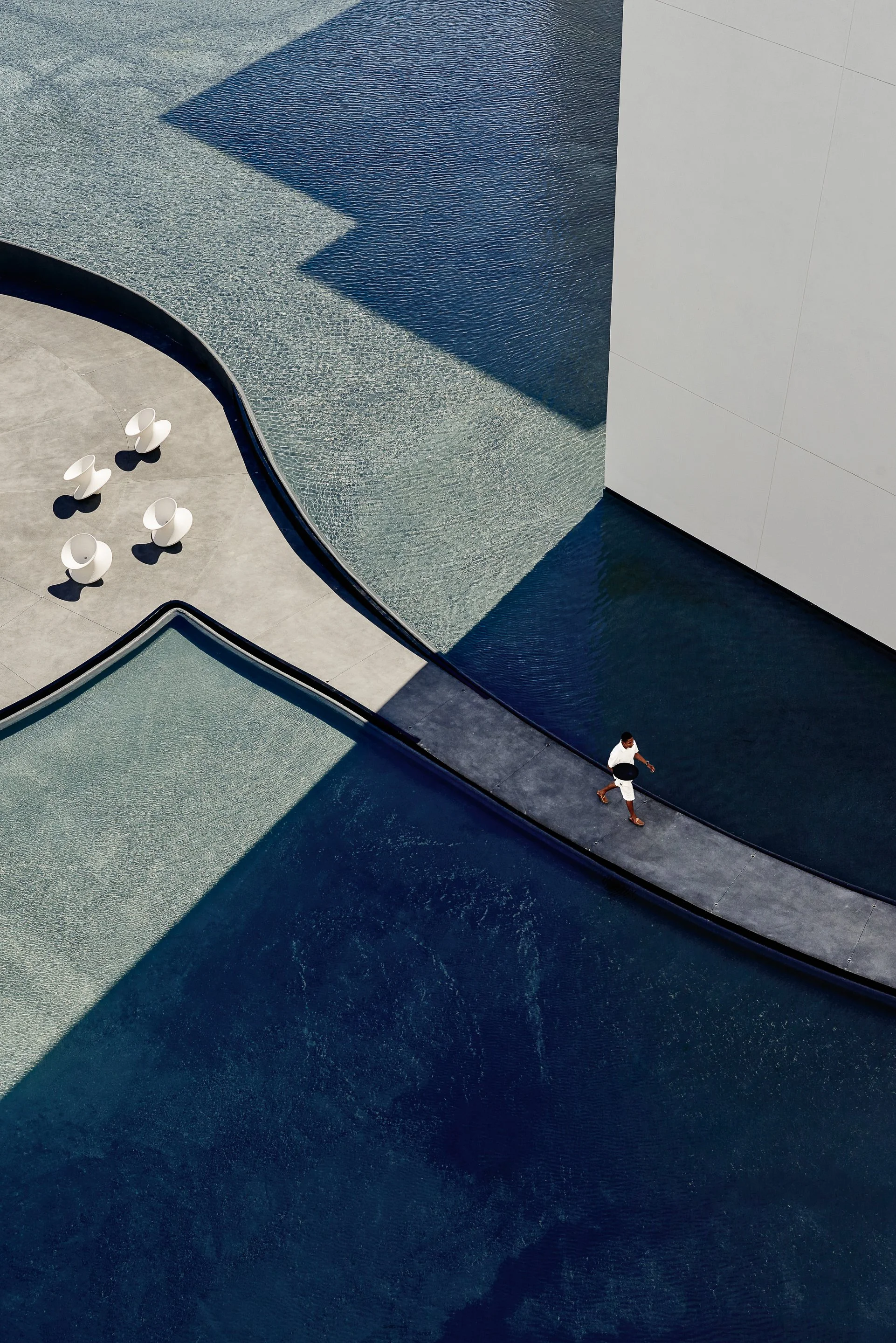
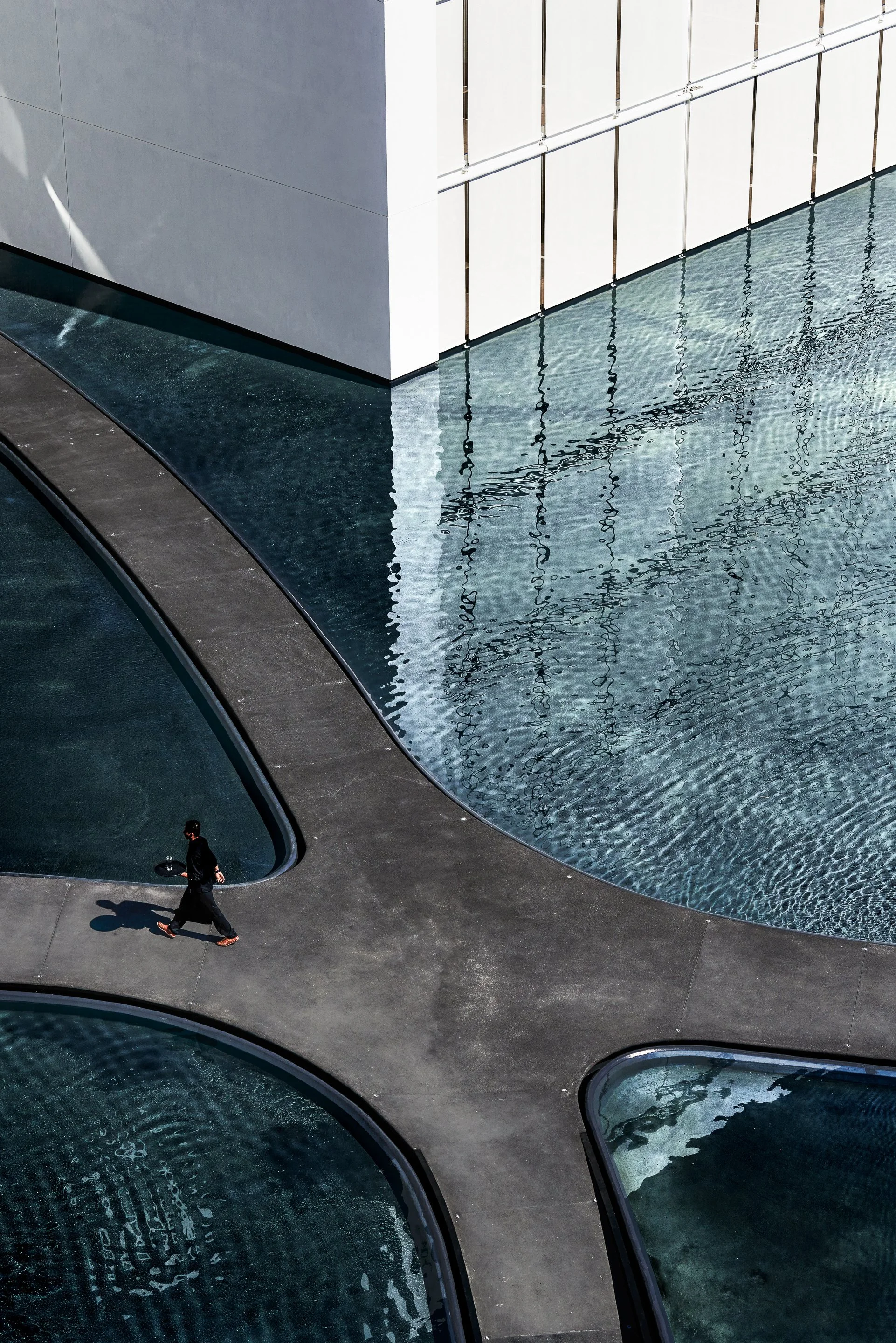
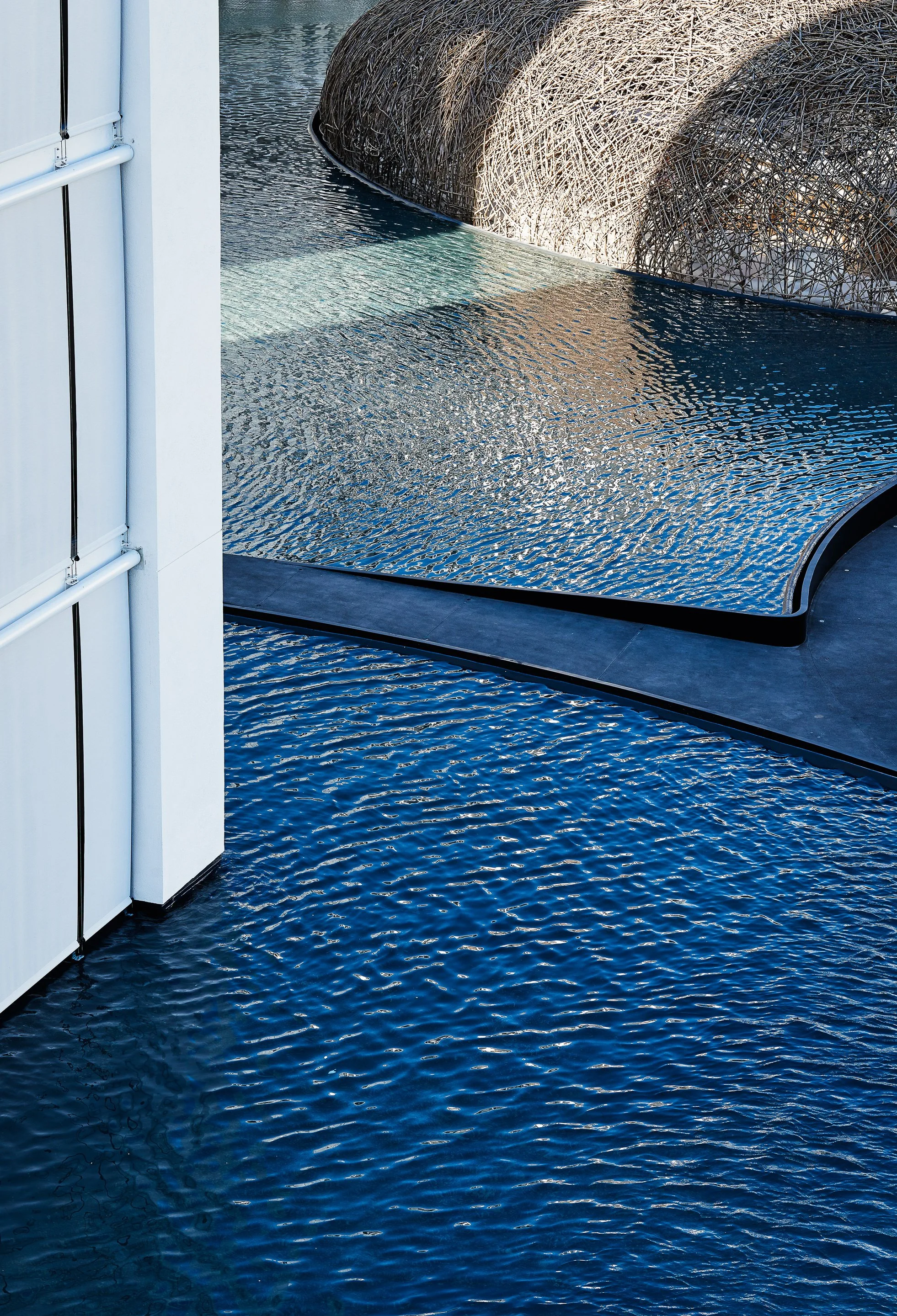
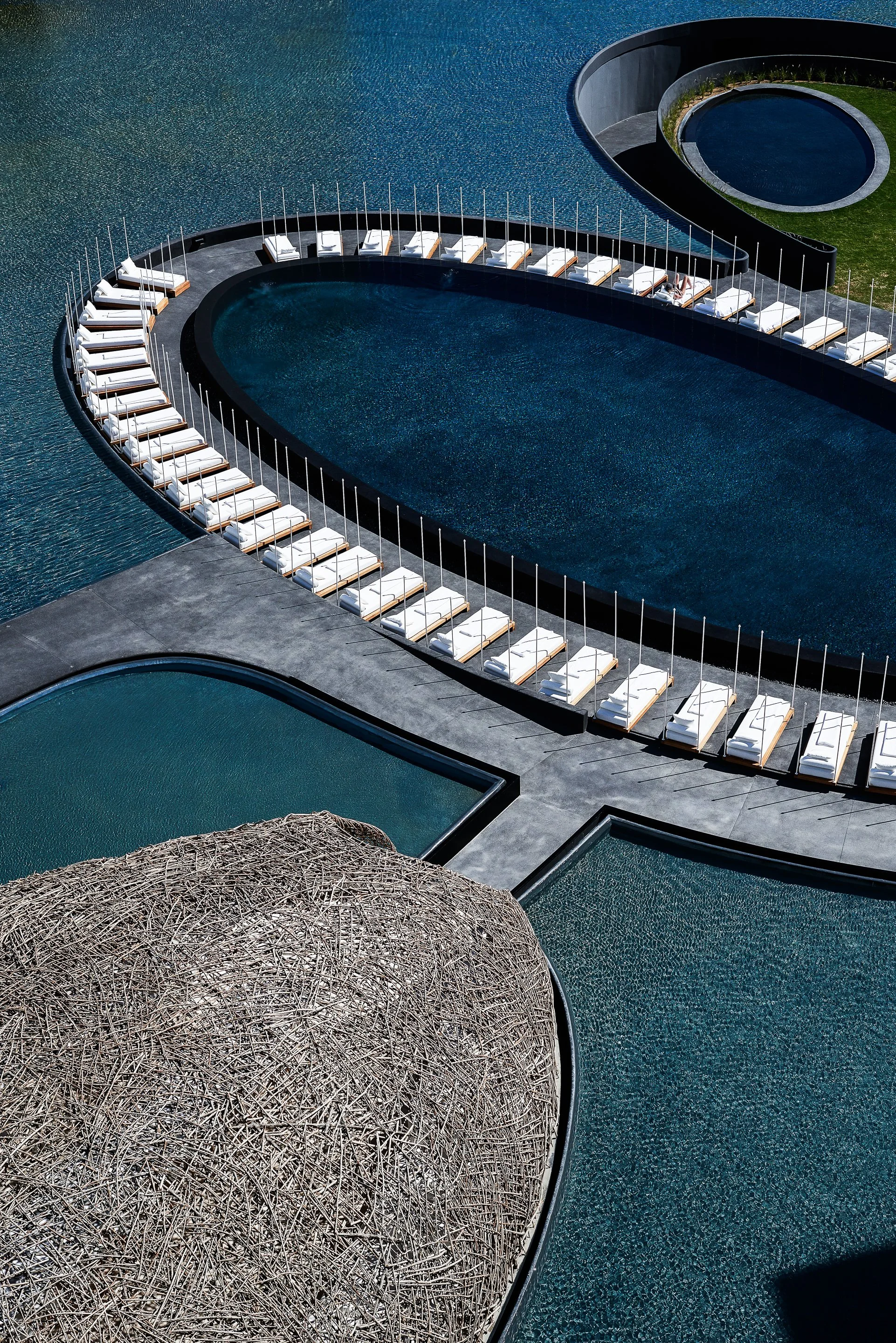
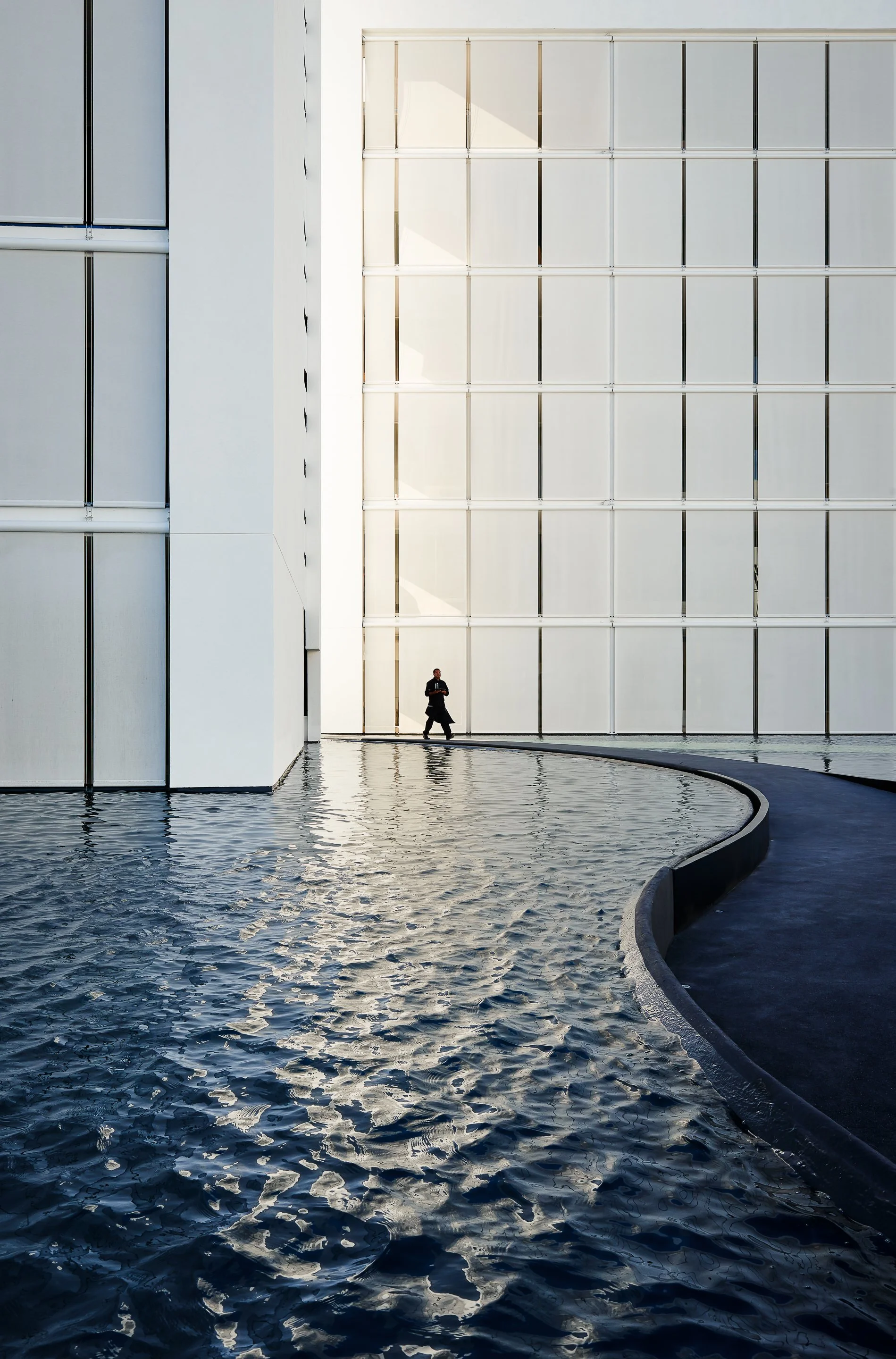
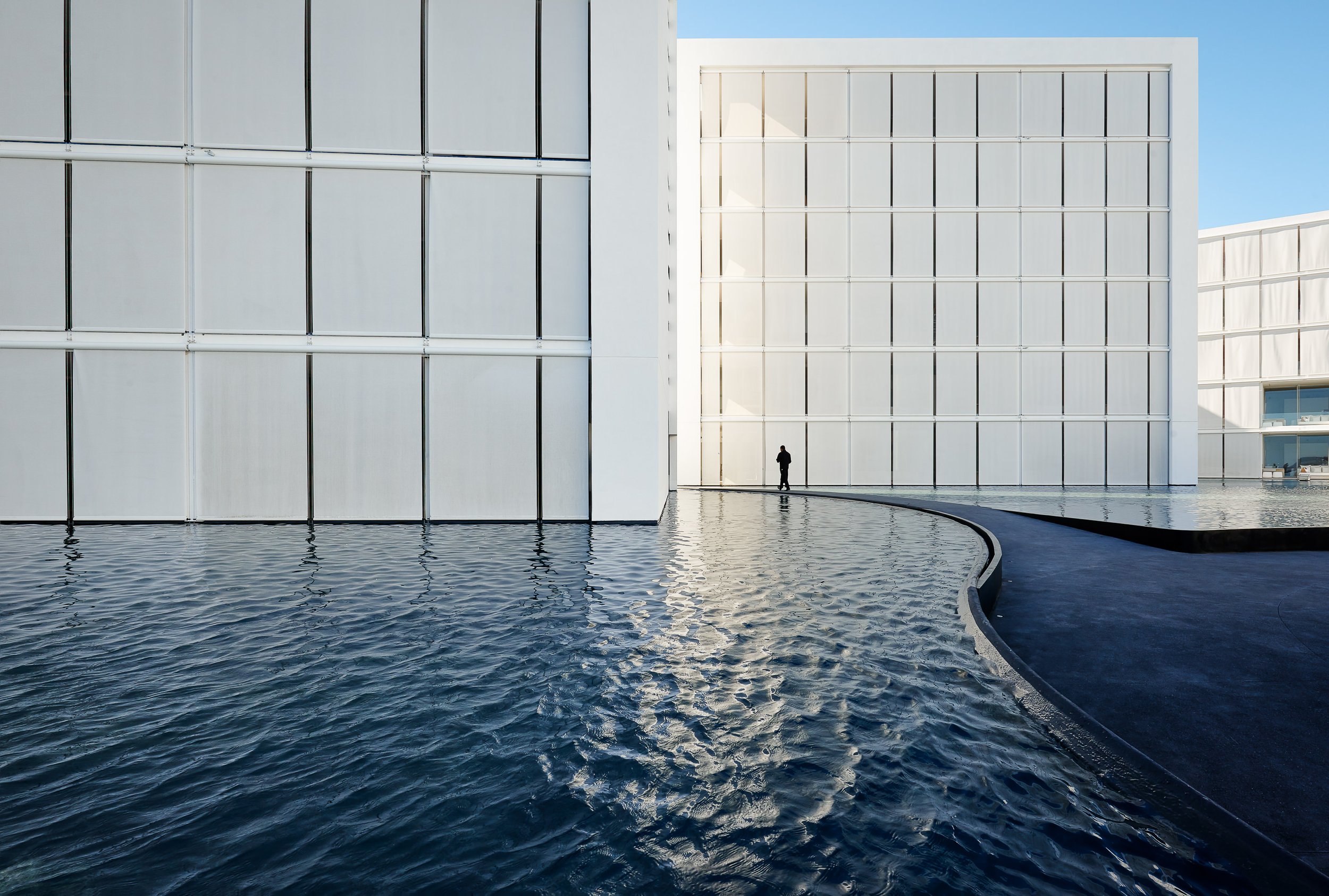
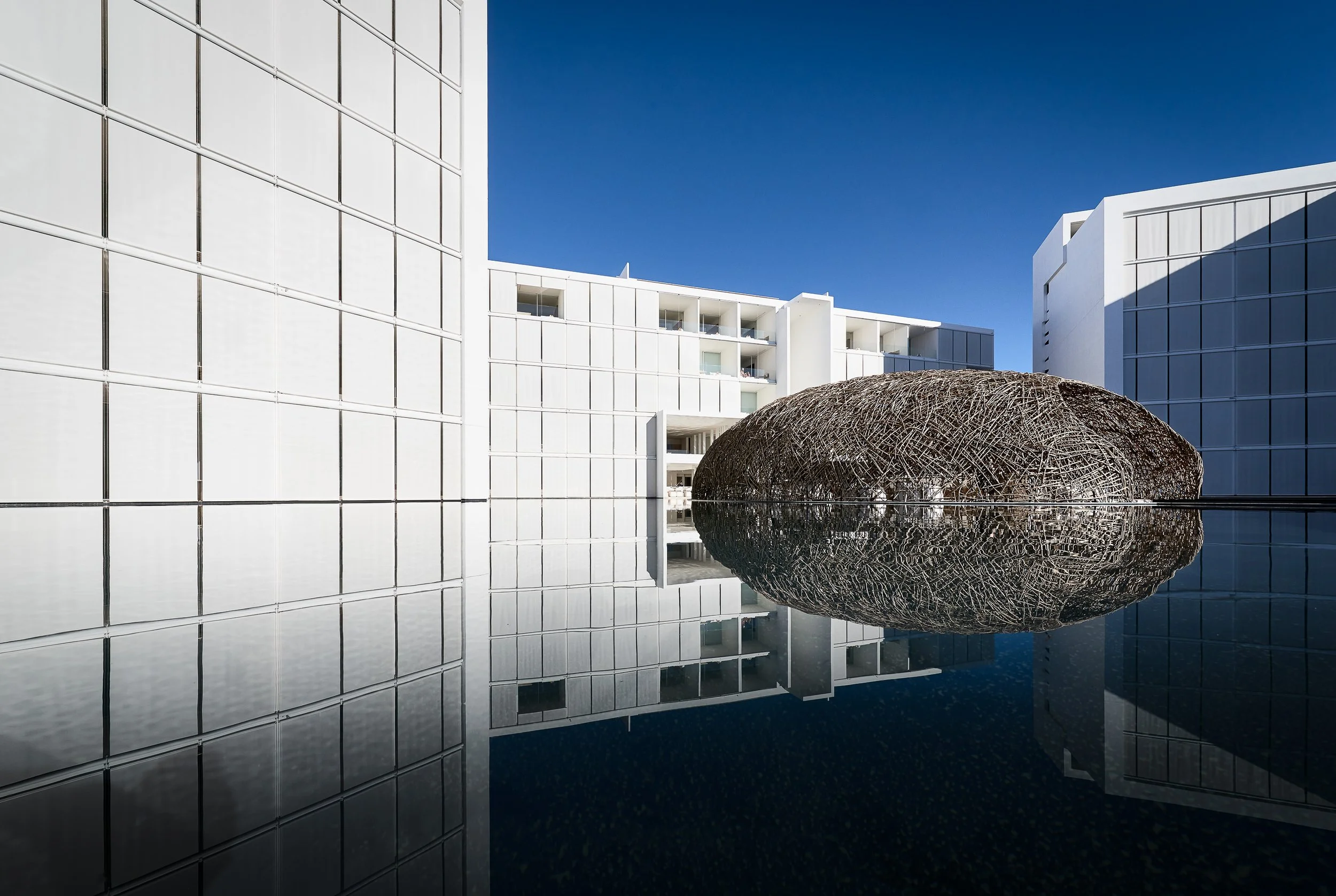
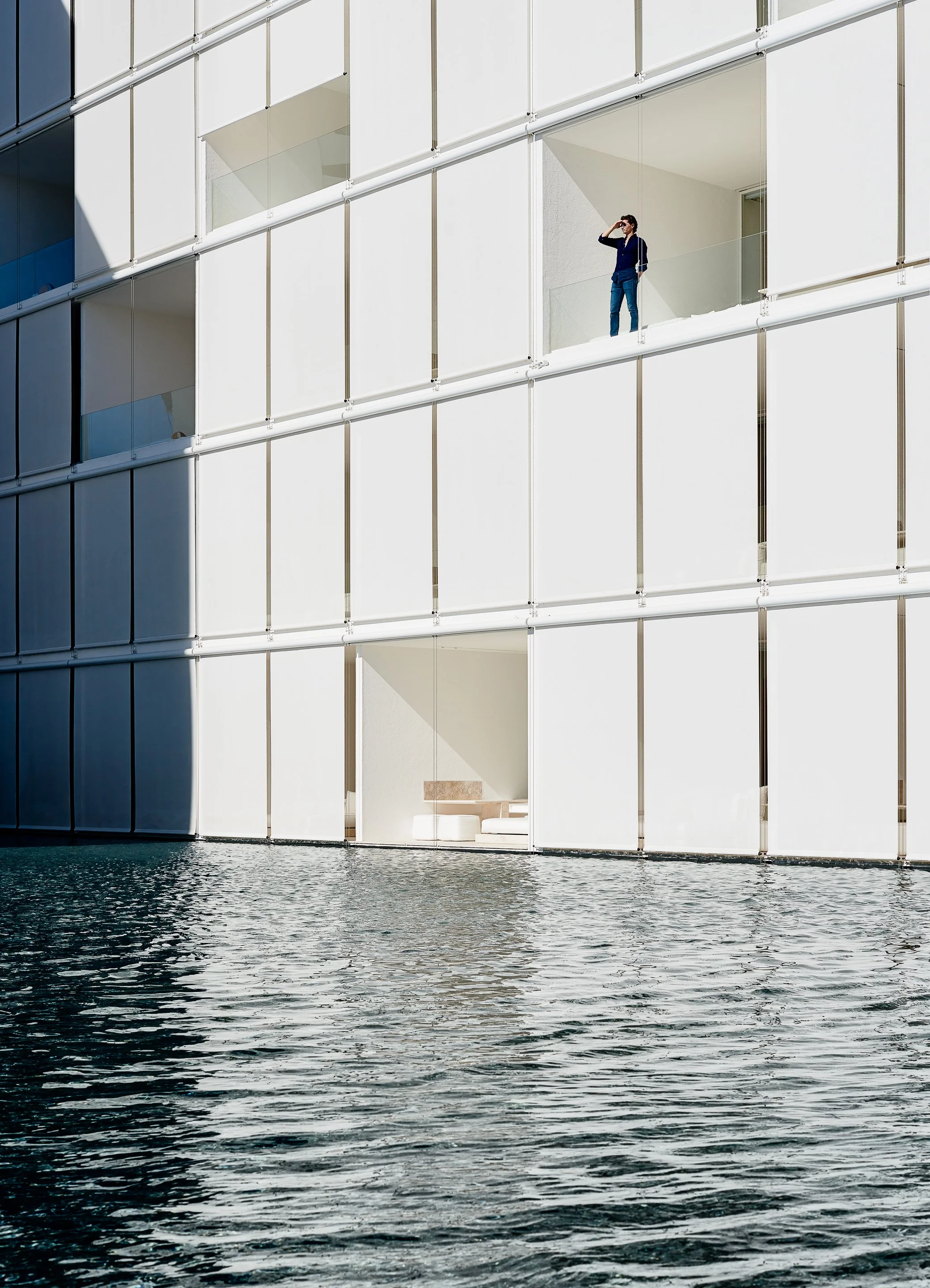
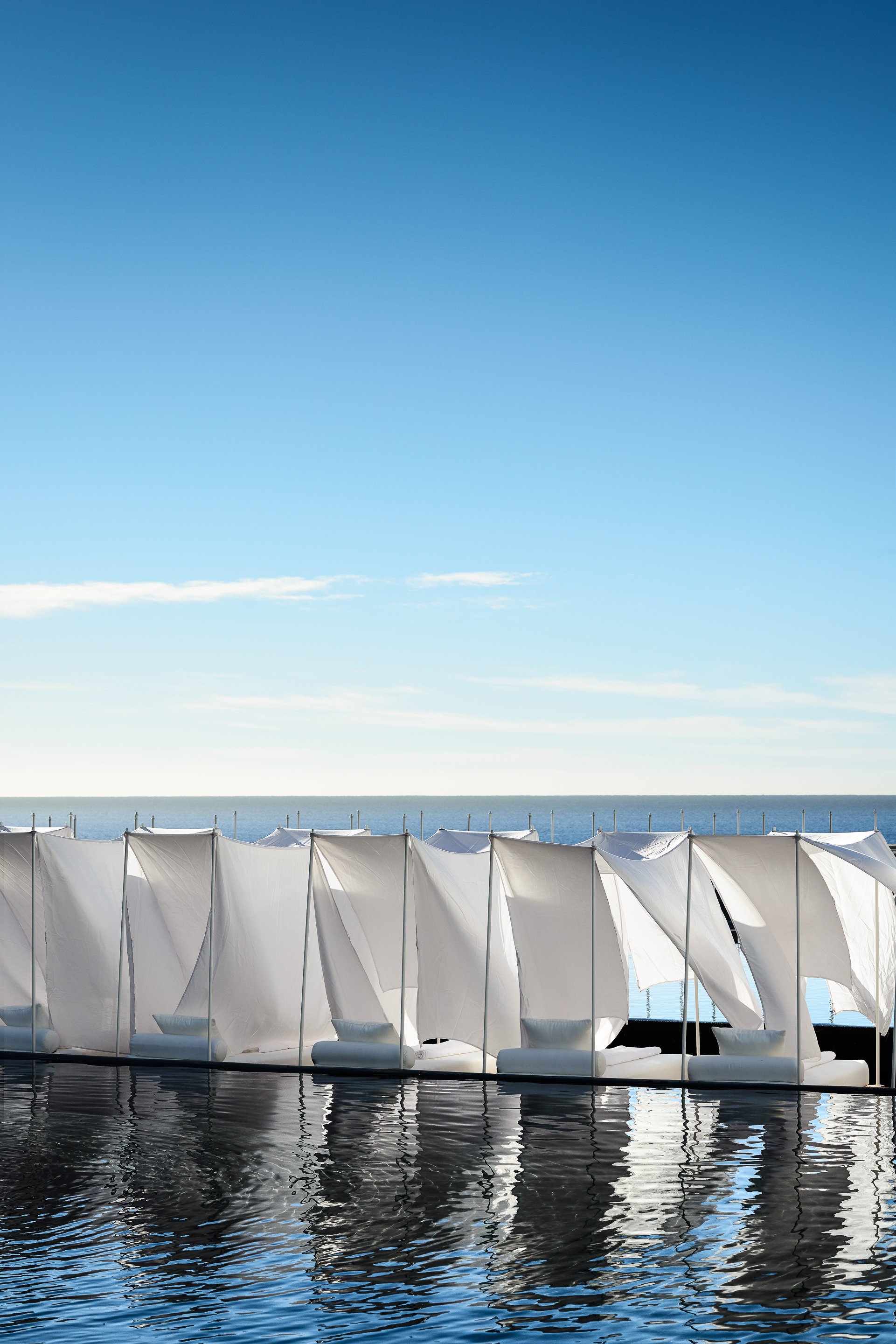
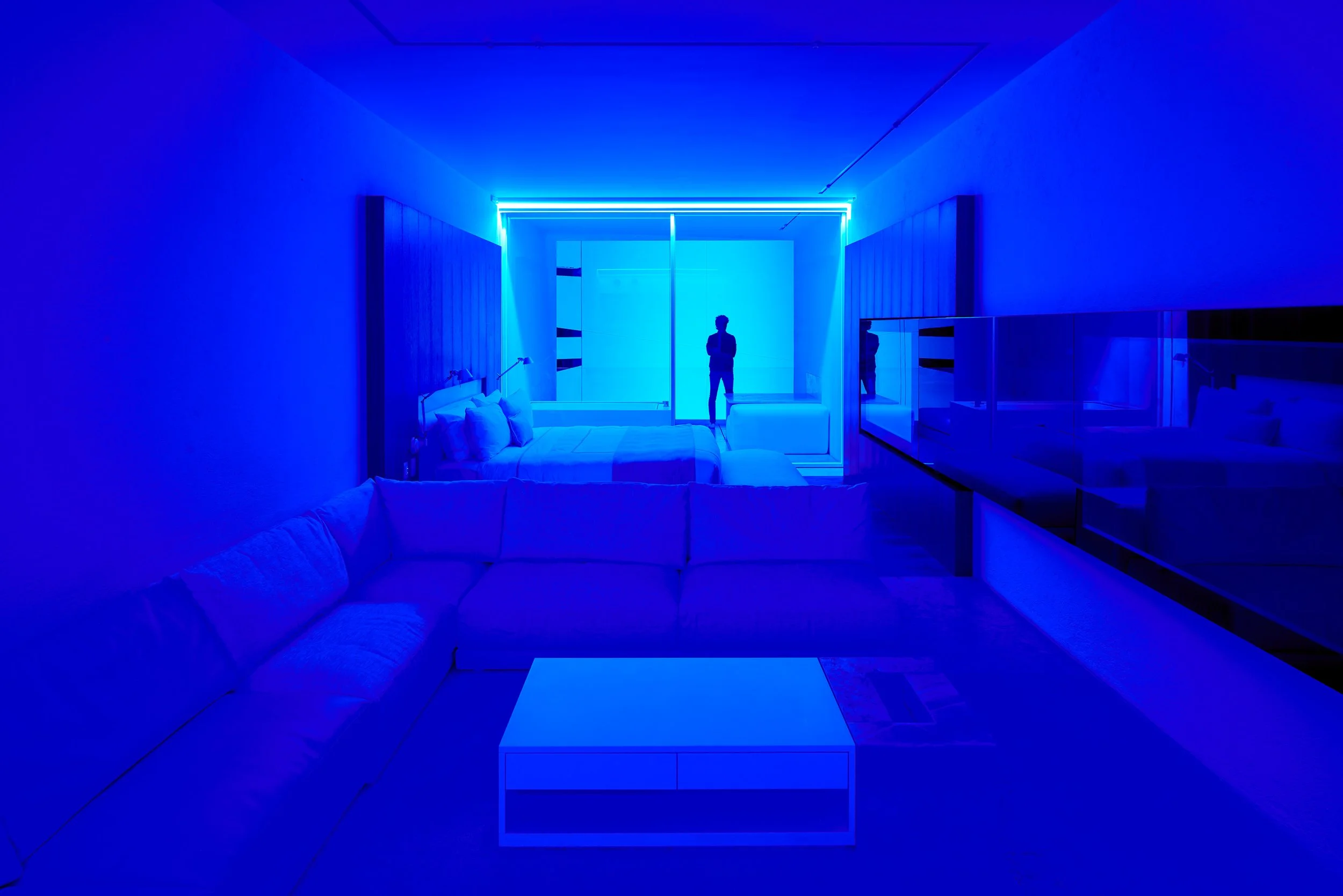
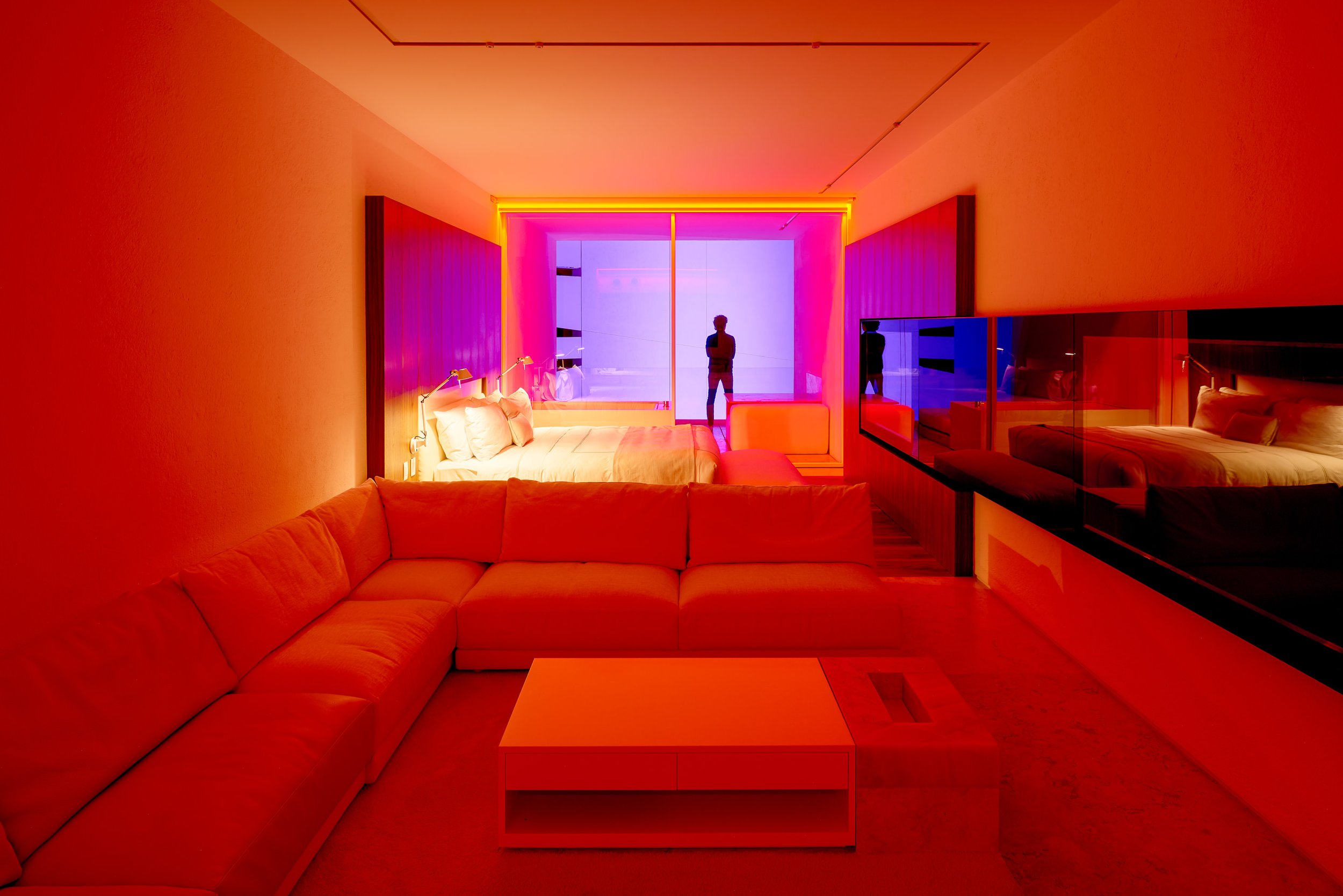
Though plans and elevations of the buildings reveal a largely rectilinear composition, much of the décor and even the walkways across the basins employ sweeping curves that provide a contrast with the façades and volumes. Here as elsewhere in his work, the architect calls on a palette of saturated colors for the night lighting, giving a very different aspect to the hotel at night and somehow replacing the colors of nature in a coherent way. "I believe," writes Aragonés, "that the greatest virtue of architecture is the generation of sensations through space on a series of planes that are found within the realm of sensitivity. I believe this capacity becomes still greater when your surroundings allow you to meld into them, forming thus part of your own space; in this sense, I wanted to take that horizon and bring it into the foreground. The water is an event that borders the entire project; all of the volumes open up toward the sea and turn their backs on the city, which is all that remains of the original surroundings, burdened by noise.
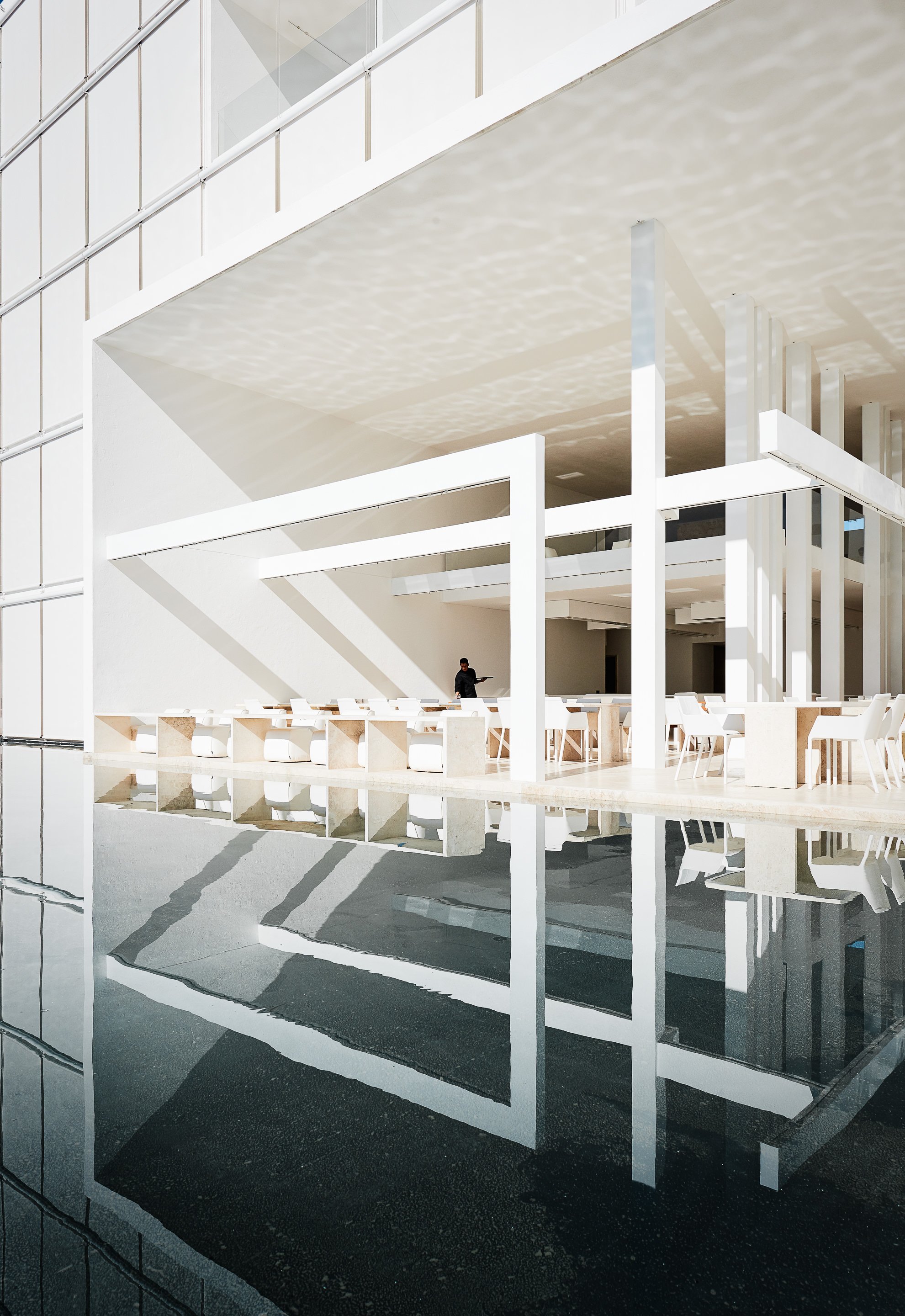
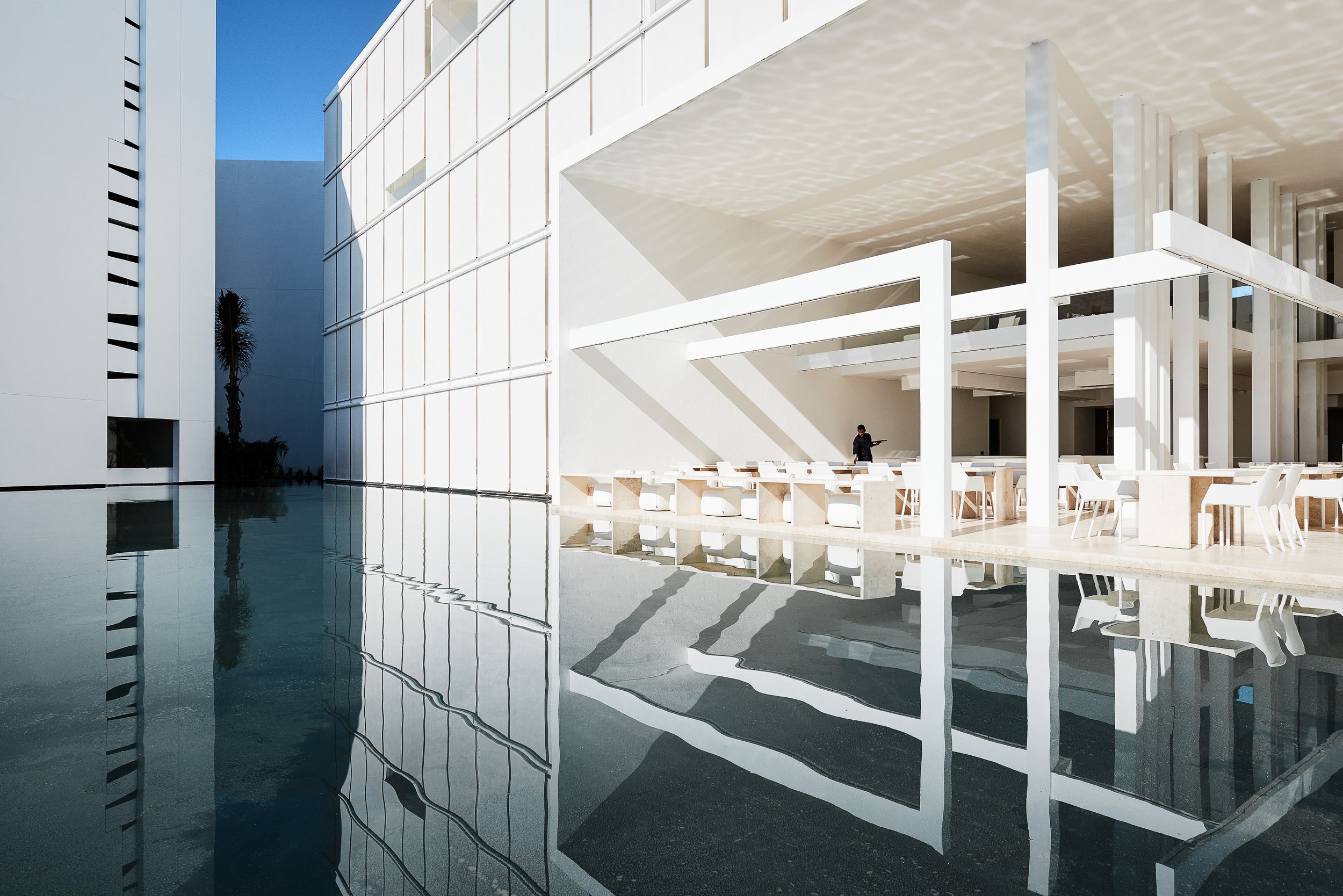
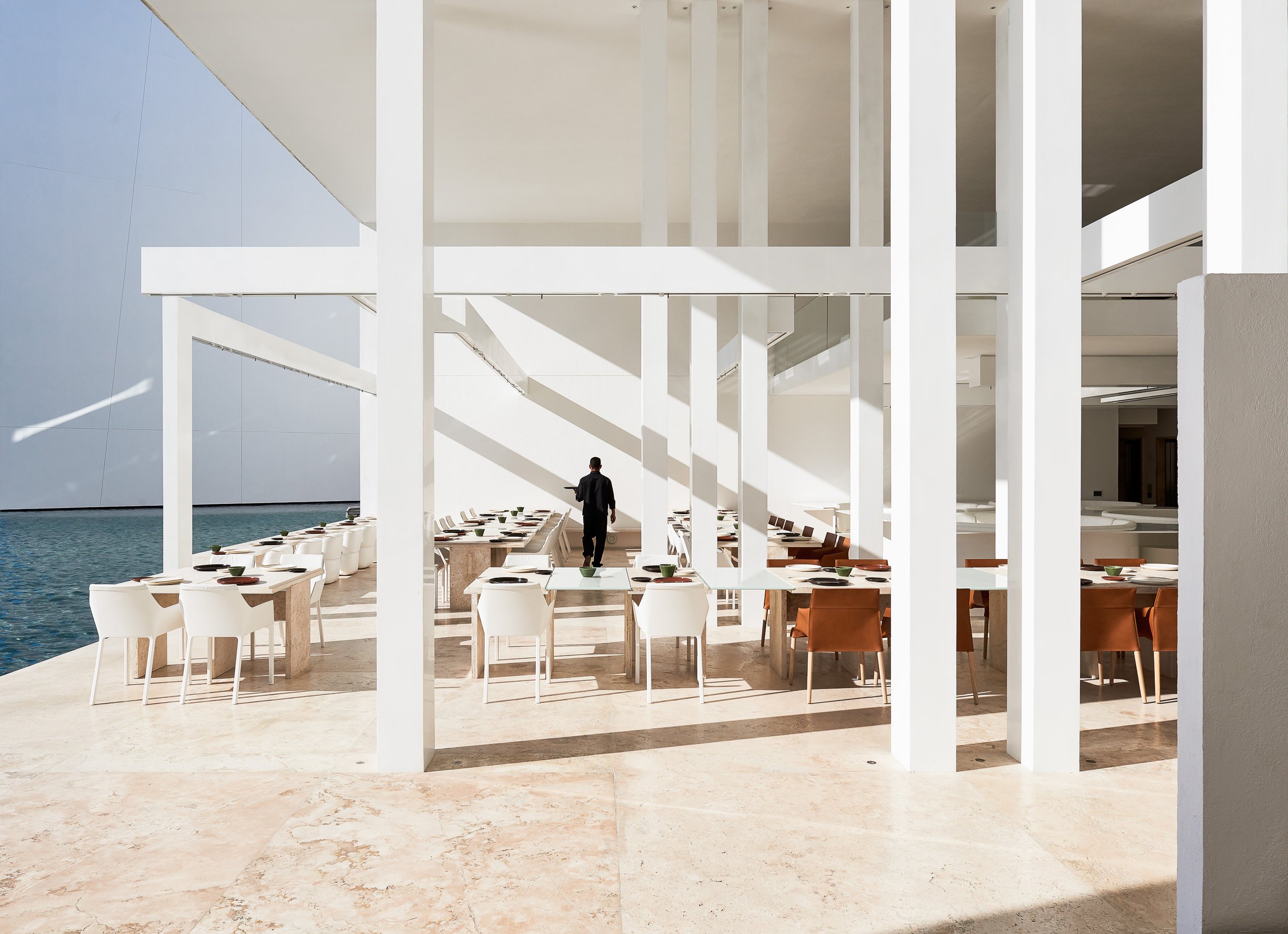
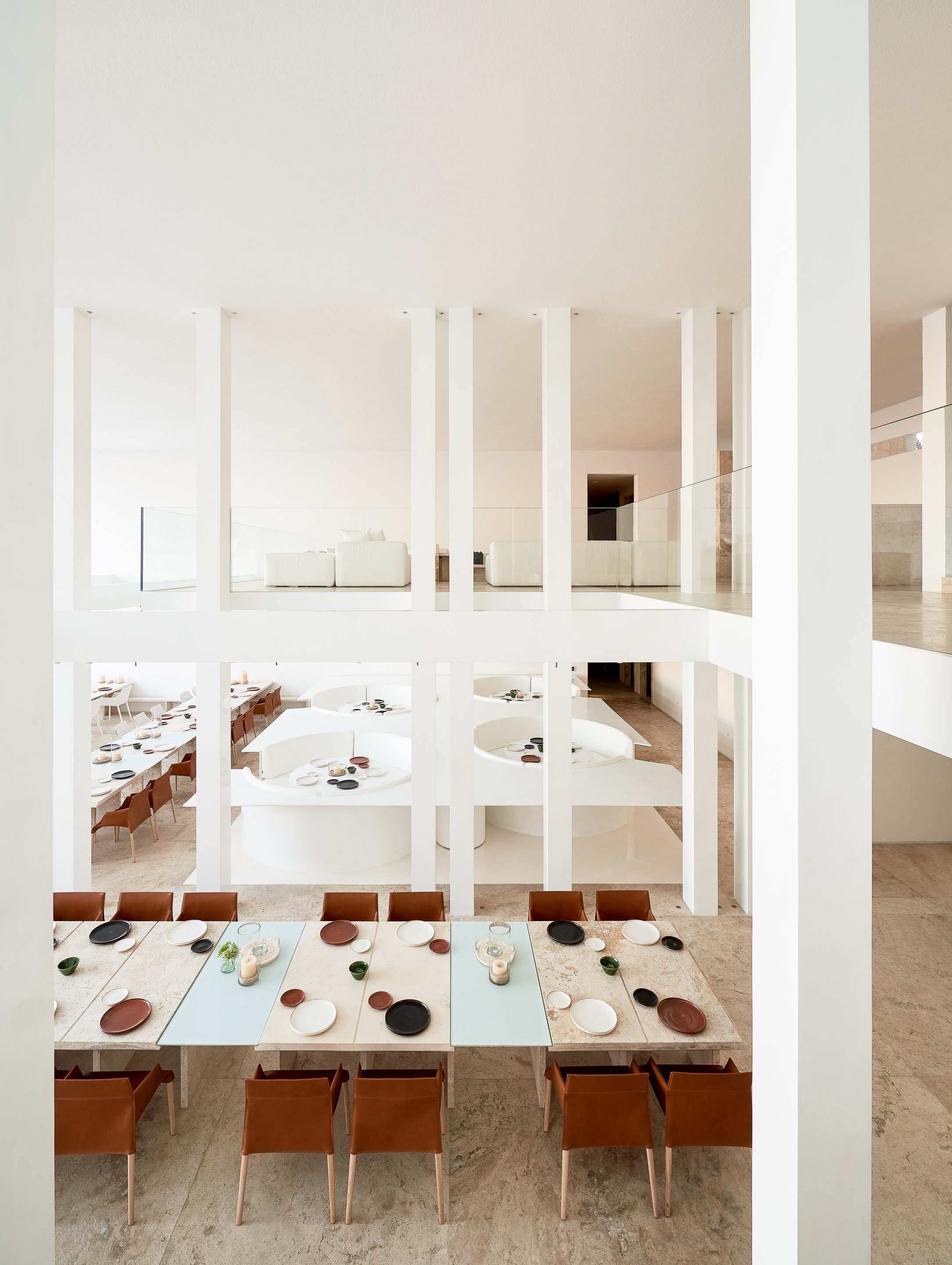
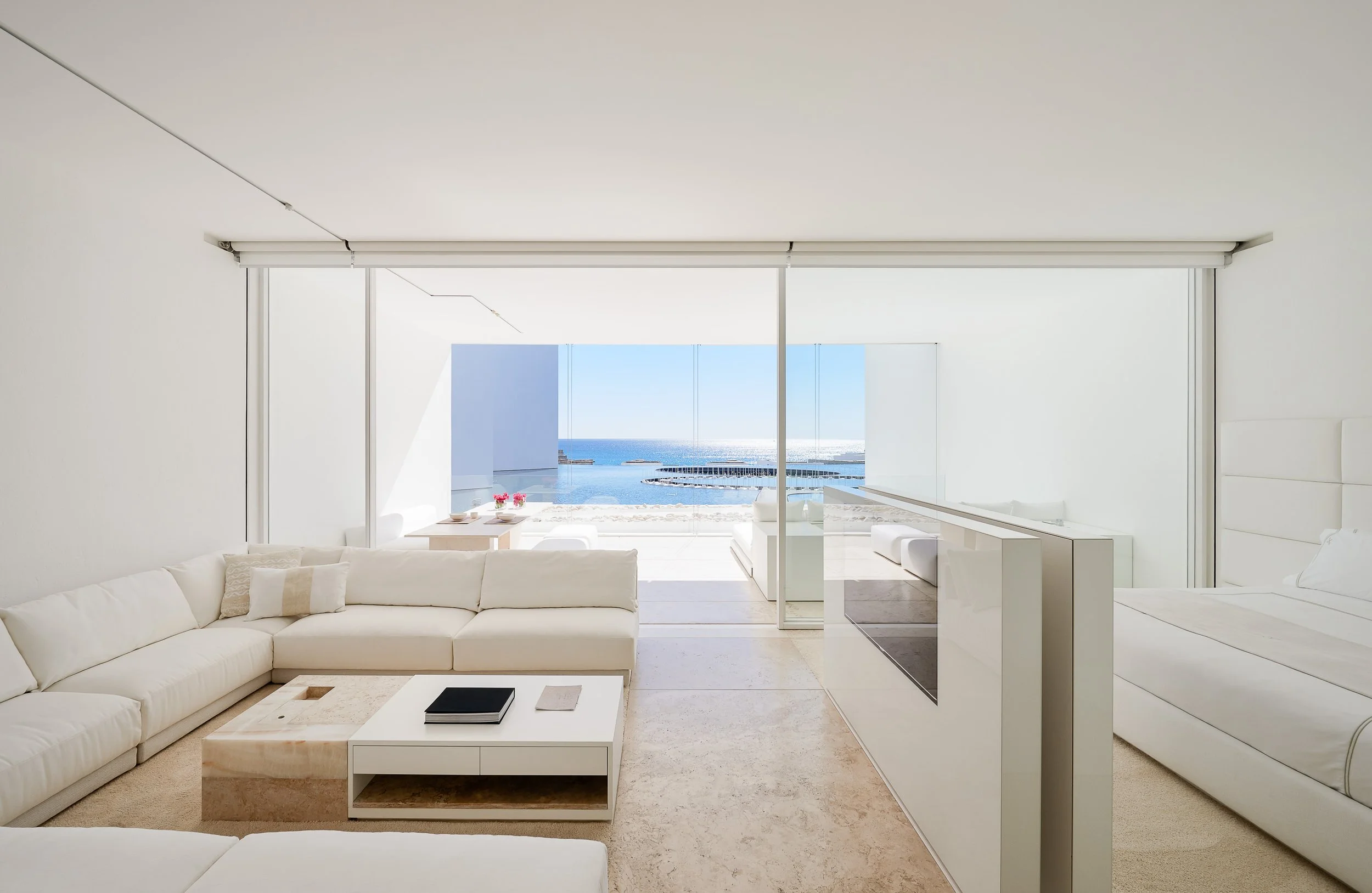
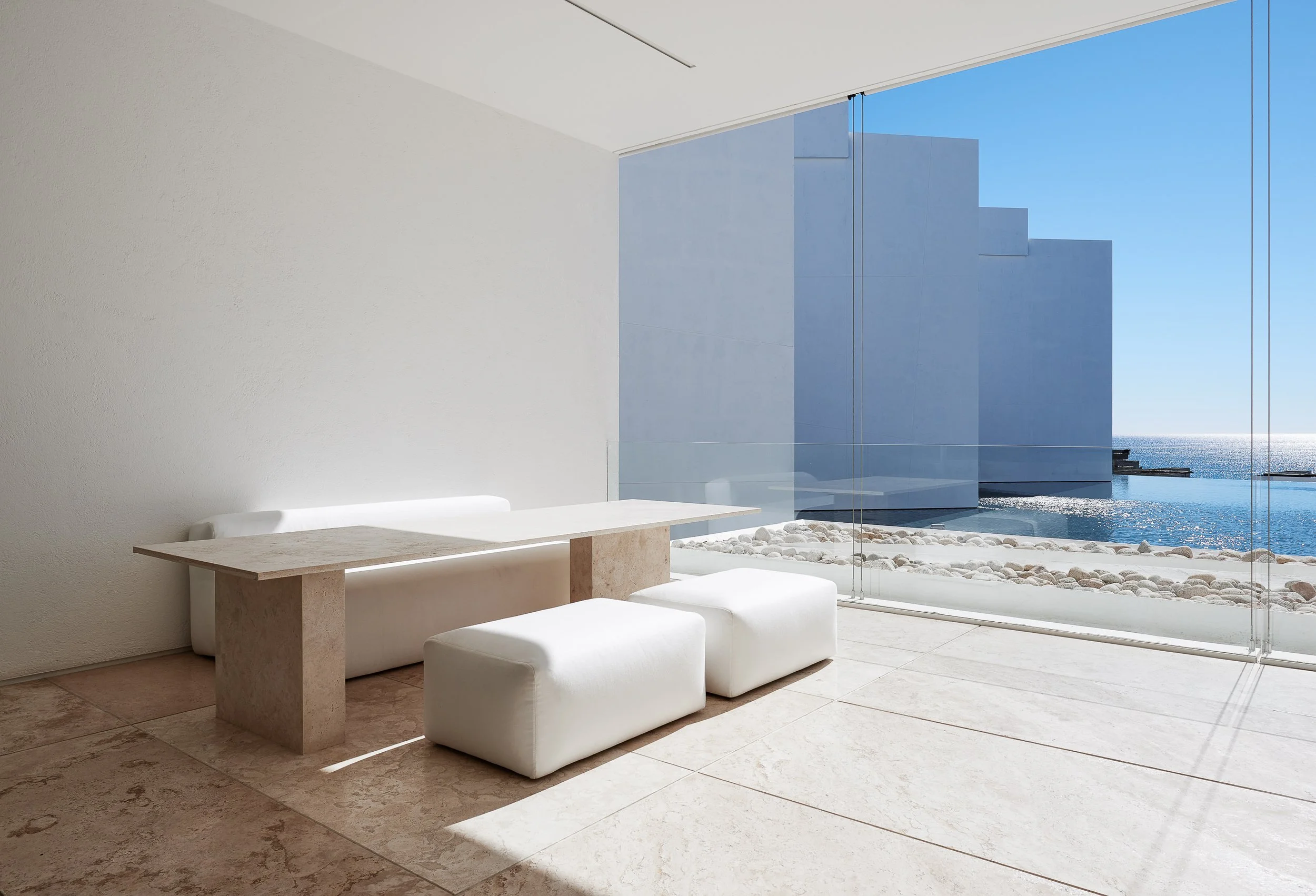
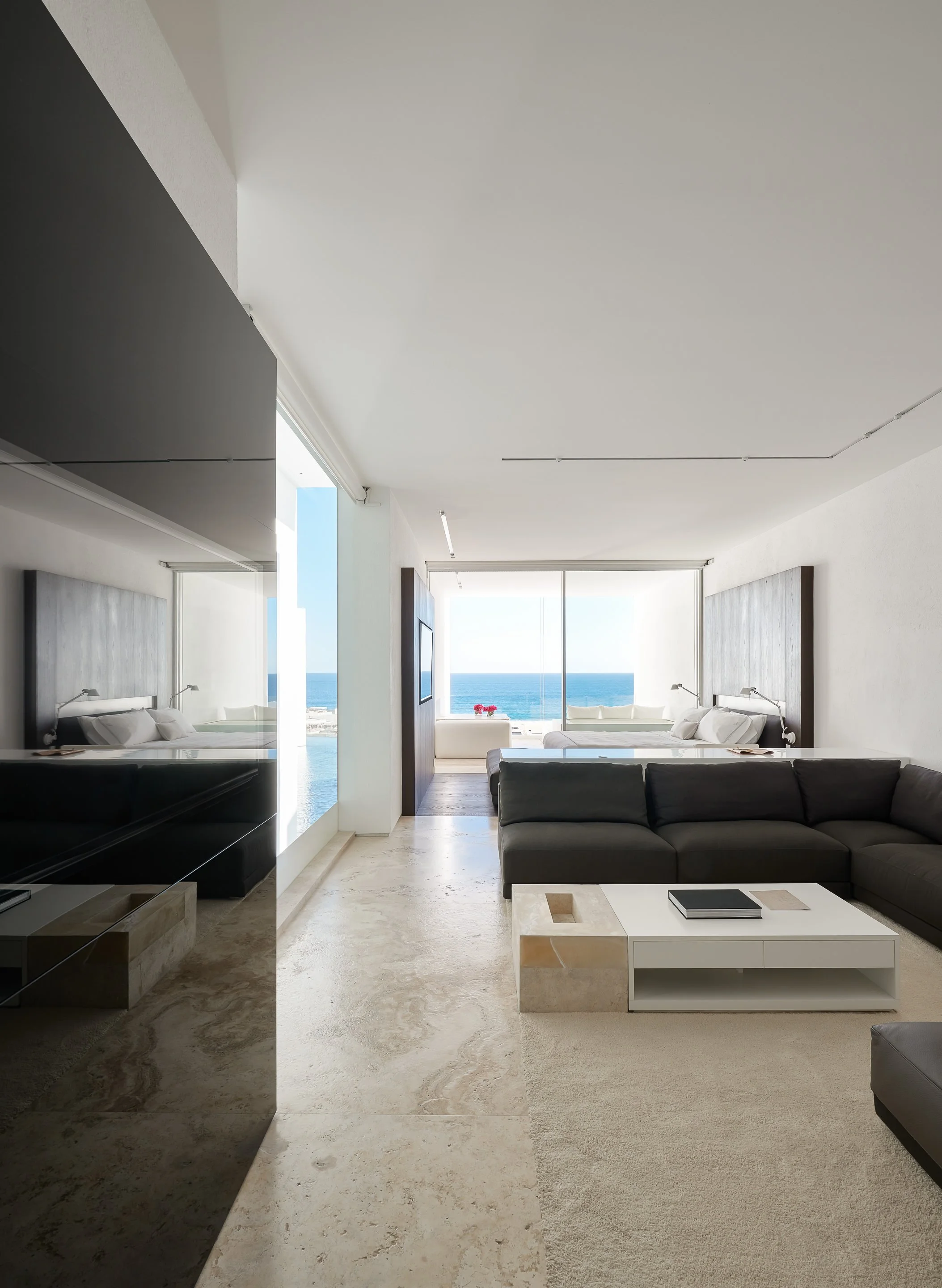
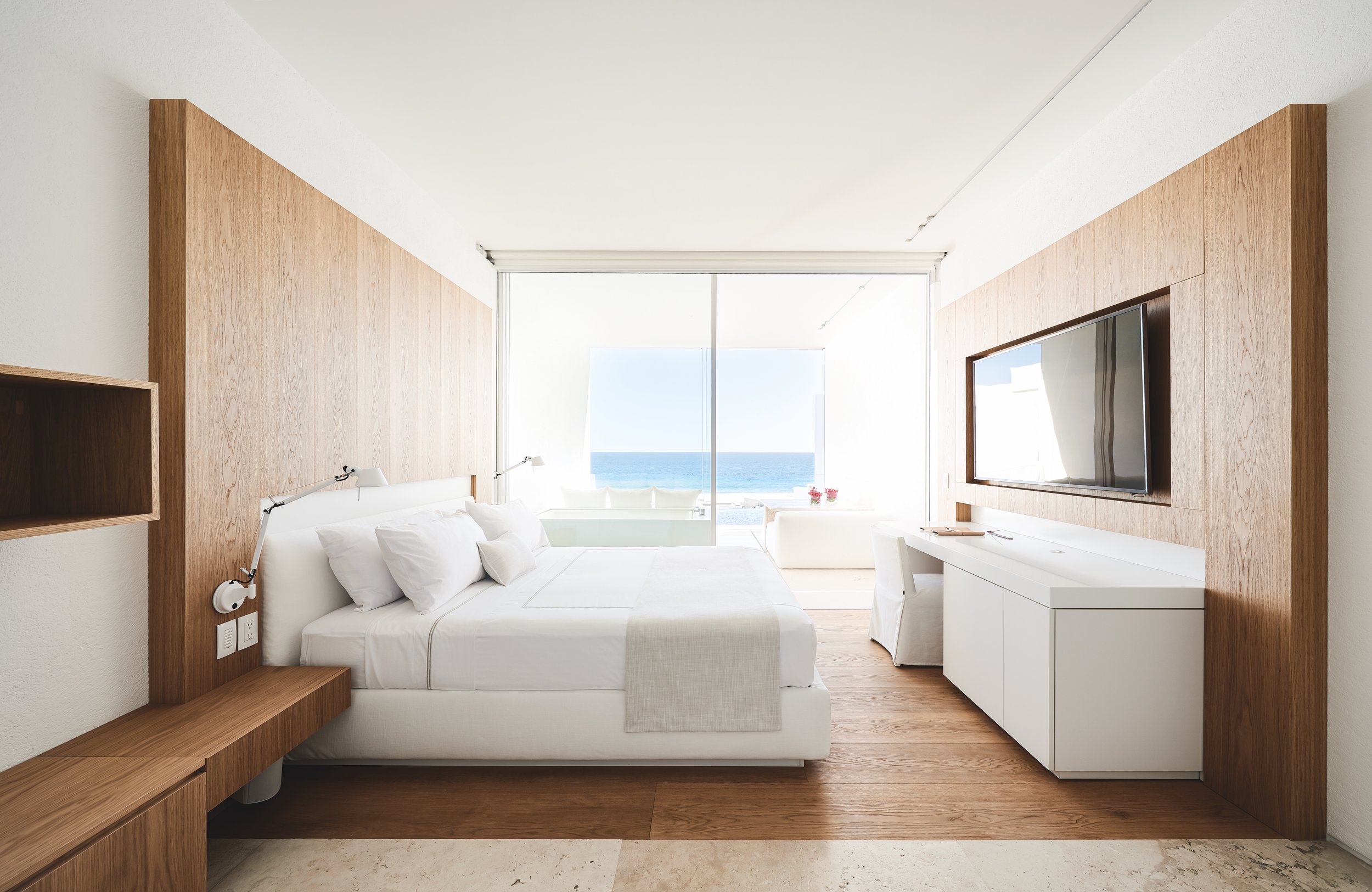
Mar Adentro is a kind of Medina that opens out onto the sea. Each floating volume contains interiors that form, in turn, independent universes. Each room visually contains a piece of the sea; no one can resist gazing out at it." Ovals are also present in the spa, which spirals down from the water level into a dark, albeit colorfully lit, space where a feeling of protected relaxation is generated by the architecture itself. In a complex that is, after all, dominated by straight lines, the curves here, echoing others in the hotel, assume a natural, almost organic presence that is well suited to the function of the space.

PRoject DEtails
-
Miguel Angel Aragonés
-
Juan Carlos Vidaña, Jose Torres, Rafael Aragonés C.
-
Joe Fletcher
-
Mario Palacios Kaim
-
San Jose del Cabo, BCS, Mexico
-
47,082 M2